

Poor sleep can worsen mood, memory, focus, and safety in older adults. If you’re age 65 or older and sleep problems last more than a few weeks, or come with signs of depression, anxiety, confusion, loud snoring, or daytime sleepiness, it makes sense to talk with a doctor or mental health professional.
Most older adults still need 7–9 hours of sleep a night. But sleep time is only part of the picture. How well you sleep and how you function during the day matter just as much. Trouble falling asleep, waking often, waking too early, or feeling sleepy all day should not be brushed off as “just aging.”
Here’s the short version:
- Poor sleep and mental health affect each other
- Depression, anxiety, pain, illness, and medications can all disturb sleep
- Sleep loss can look like memory trouble or poor concentration
- Loud snoring, gasping, or breathing pauses may point to sleep apnea
- Simple routine changes can help, but some cases need medical care
A few day-to-day signs to watch for:
- missed appointments
- forgotten medicines
- trouble following conversations
- more irritability or worry
- falls, slower reactions, or morning confusion
Bottom line: if sleep problems start affecting your mood, thinking, or daily life, don’t ignore them. Small sleep issues can turn into bigger mental health and safety problems over time.
Why Sleep Gets Worse With Age (And What Actually Helps) | Mayo Clinic Aging Forward Podcast
How poor sleep affects mood, thinking, and daily life
Poor sleep can take a toll on mood, thinking, and day-to-day life. For older adults, that can make it harder to stay safe and live on their own.
Mood changes, depression, and anxiety
When sleep problems stick around, the emotional strain can build over time. Irritability, anxiety, and hopelessness may become easier to notice. Even small stressors can start to feel like a lot more than they are.
Some people also pull back from friends or family. Others may start to feel like a burden, which can make a hard stretch feel even heavier.
Memory, attention, and staying independent
Poor sleep can hurt memory, attention, and judgment. In many cases, these changes show up first in daily routines, not in big dramatic ways.
You might notice:
- missed appointments
- forgotten medications
- trouble following conversations
- difficulty managing bills or household tasks
Sleep loss can also slow reaction time and reduce alertness. That can increase the risk of falls and make everyday tasks tougher to handle.
If these problems keep happening, the next step is to look for what is disrupting sleep.
Common sleep problems and what may be causing them
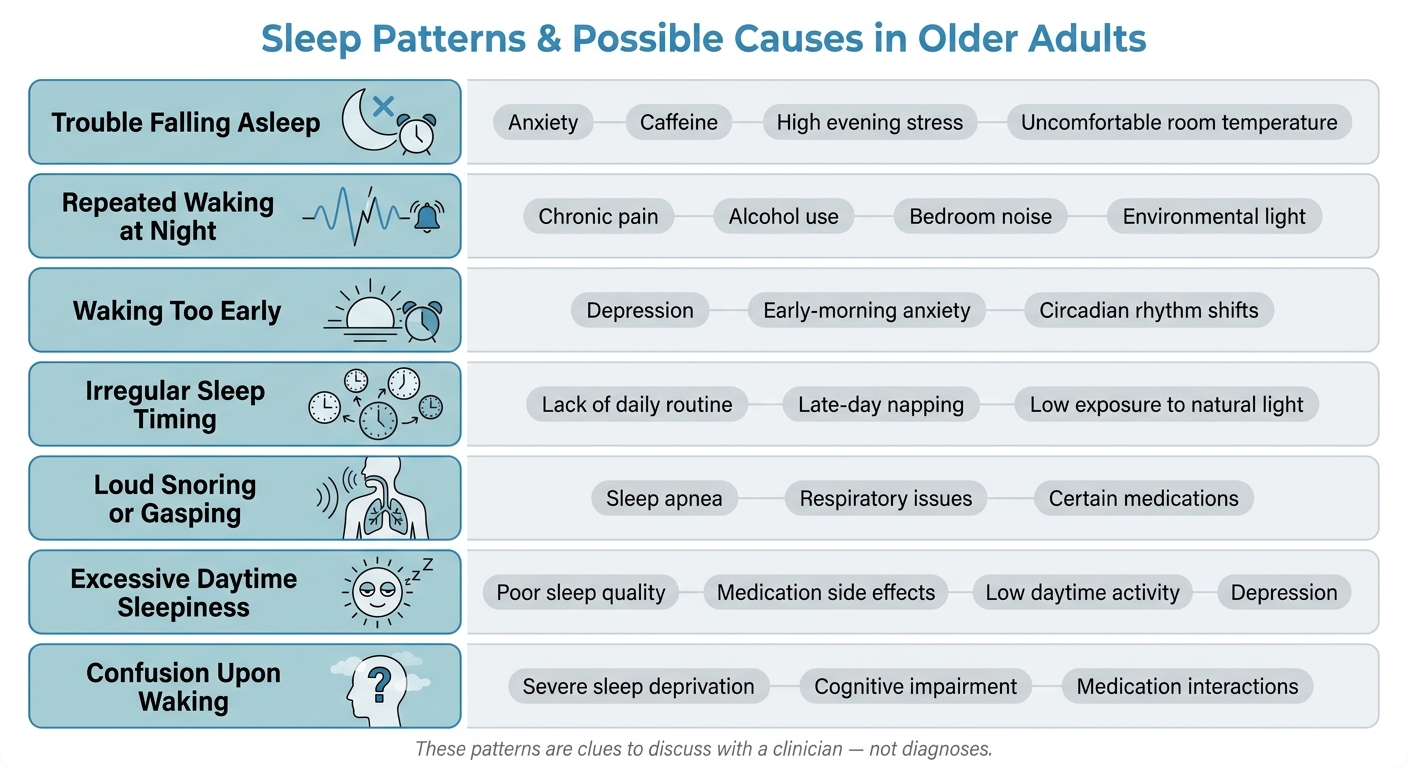
Sleep Patterns & Causes in Older Adults: A Quick Reference Guide
Sleep trouble in older adults doesn't all look the same. And that matters, because the cause often depends on the pattern.
Pain, depression, anxiety, and other health issues can make it hard to fall asleep or stay asleep. Some medications can also affect sleep as a side effect. Do not adjust or stop any medication without speaking to a clinician first.
Warning signs that point to a deeper problem
Some symptoms can point to a medical issue instead of a simple sleep habit problem. Loud snoring, gasping, or pauses in breathing during sleep can point to sleep apnea. Excessive daytime sleepiness or waking confusion can also be a sign that something more is going on.
Common contributors: pain, illness, medications, habits, and surroundings
Daily habits and the bedroom setup can also get in the way of sleep. Late naps, caffeine, evening alcohol, and a bedroom that's too warm, too bright, or too noisy can all disrupt sleep.
The patterns below are meant to offer direction. They are clues to discuss with a clinician, not diagnoses.
| Sleep pattern or symptom | Possible contributors |
|---|---|
| Trouble falling asleep | Anxiety, caffeine, high evening stress, uncomfortable room temperature |
| Repeated waking at night | Chronic pain, alcohol use, bedroom noise, environmental light |
| Waking too early | Depression, early-morning anxiety, circadian rhythm shifts |
| Irregular sleep timing | Lack of daily routine, late-day napping, low exposure to natural light |
| Loud snoring or gasping | Sleep apnea, respiratory issues, certain medications |
| Excessive daytime sleepiness | Poor sleep quality, medication side effects, low daytime activity, depression |
| Confusion upon waking | Severe sleep deprivation, cognitive impairment, medication interactions |
When you can spot the pattern, it's much easier to talk through the next steps with a clinician and start building sleep habits that help.
Practical steps older adults can take to sleep better
Daily habits that support a steadier sleep schedule
Once you spot the likely triggers, a few steady habits can help get sleep back on track and make the day feel a bit easier too. Try to go to bed and wake up at the same time each day, including weekends. That kind of routine helps your body know when it’s time to rest and when it’s time to get moving.
Better sleep can also ease irritability, low mood, and poor concentration. And what you do during the day matters. Daytime activity often helps you sleep better at night. If you nap, keep it short and earlier in the day so it doesn’t cut into nighttime sleep.
Bedroom and evening changes that reduce nighttime waking
A bedroom that’s dark, quiet, and comfortably cool can help cut down on waking during the night. Safety matters too, especially if you need to get up after bedtime. Keep the path to the bathroom clear, dry, and well lit. A nightlight can help if needed.
In the evening, it helps to settle into a calming routine before bed. BestLife Counseling notes that a relaxing bedtime routine can support mood and cognitive function. Even five minutes of meditation or deep breathing can help you slow down and get ready for sleep. It’s also smart to limit caffeine and alcohol later in the day.
If sleep still does not improve, medical or mental health evaluation may be needed.
When to get professional help for sleep or mental health
Sometimes routine changes help. Sometimes they don't.
If your sleep still isn't improving after you've cleaned up your routine, it's time to get checked out. A professional evaluation can help spot medical issues, sleep disorders, or mental health concerns that may be driving the problem.
You should seek care if sleep problems last more than a few weeks, start affecting daily life, or show up alongside sadness, hopelessness, anxiety, loss of interest, or confusion. Loud snoring, gasping, or pauses in breathing during sleep also need medical attention.
| Situation | Professional evaluation |
|---|---|
| Sleep problems lasting more than a few weeks | Recommended if symptoms continue |
| Persistent low mood, sadness, or hopelessness | Strongly recommended |
| Loud snoring or pauses in breathing during sleep | See a physician or sleep specialist |
| Worsening anxiety or confusion | Recommended promptly |
Local in-person care can be helpful when sleep issues are connected to mood, anxiety, or medication needs. BestLife Counseling offers in-person therapy and APN services in Cape May County, NJ.
Conclusion: Better sleep can support better mental health
Persistent sleep and mental health symptoms deserve real attention, not just routine adjustments. Start with a primary care doctor, sleep specialist, or local mental health clinician.
FAQs
Can poor sleep mimic dementia?
Yes. Poor sleep can slow thinking, speech, and movement in ways that can look a lot like cognitive decline. When those symptoms are linked to problems like untreated depression, this is sometimes called pseudodementia.
The big difference is that, unlike dementia, these symptoms may get better with the right treatment. If you’re worried about what’s causing them, BestLife Counseling offers in-person mental health services, including psychiatric evaluations and therapy, to help pinpoint the cause.
What kind of doctor should I see first?
If sleep changes last more than 2 weeks or start getting in the way of day-to-day life, begin with a primary care provider or geriatrician.
They can do an exam, go over your medical history and medications, and order lab work to look for medical causes. If needed, they can refer you for mental health care. BestLife Counseling offers in-person therapy and APN support for psychiatric evaluations and medication management.
How long should I try sleep changes before getting help?
A good rule of thumb: get professional help if your sleep changes last more than two weeks. And if they begin to affect your day-to-day functioning or quality of life, reach out to a primary care provider, geriatrician, or mental health professional.
BestLife Counseling offers in-person mental health services, including individual therapy and psychiatric evaluations, for personalized support.