

Depression in older adults is common, treatable, and often missed because it may look like pain, fatigue, sleep trouble, or memory problems instead of sadness. In the U.S., about 15% of adults age 65+ are affected. If these changes last more than 2 weeks, or start getting in the way of daily life, I’d treat that as a sign to get medical help.
Here’s the short version of what I’d watch for:
- Mood changes: ongoing sadness, emptiness, hopelessness, guilt, or feeling like a burden
- Behavior changes: pulling away from people, losing interest in hobbies, poor hygiene, missed meals, skipped medications
- Body changes: sleep problems, low energy, weight loss or gain, aches and pains with no clear cause
- Thinking changes: trouble focusing, memory slips, slow thinking, hard time making decisions
- Emergency signs: talking about death, saying others would be better off without them, giving things away, or suicidal thoughts
What makes this hard is simple: these signs are often confused with aging, grief, illness, or dementia. But when symptoms stick around and daily routines start to fall apart, depression becomes more likely.
Here’s a quick side-by-side view:
| Area | Depression may look like | What people may mistake it for |
|---|---|---|
| Emotions | Hopelessness, guilt, flat mood | “Just a rough patch” |
| Behavior | Isolation, self-neglect, loss of interest | “Slowing down with age” |
| Physical | Fatigue, pain, appetite or sleep changes | Chronic illness or aging |
| Thinking | Memory and focus problems | Dementia |
I’d also keep one point in mind: grief comes in waves, but depression is more constant and often shuts down day-to-day functioning.
If I noticed these signs in an older loved one, I wouldn’t wait too long to see if they pass. And if there were thoughts of self-harm or suicide, I’d call or text 988 right away or go to the nearest ER.
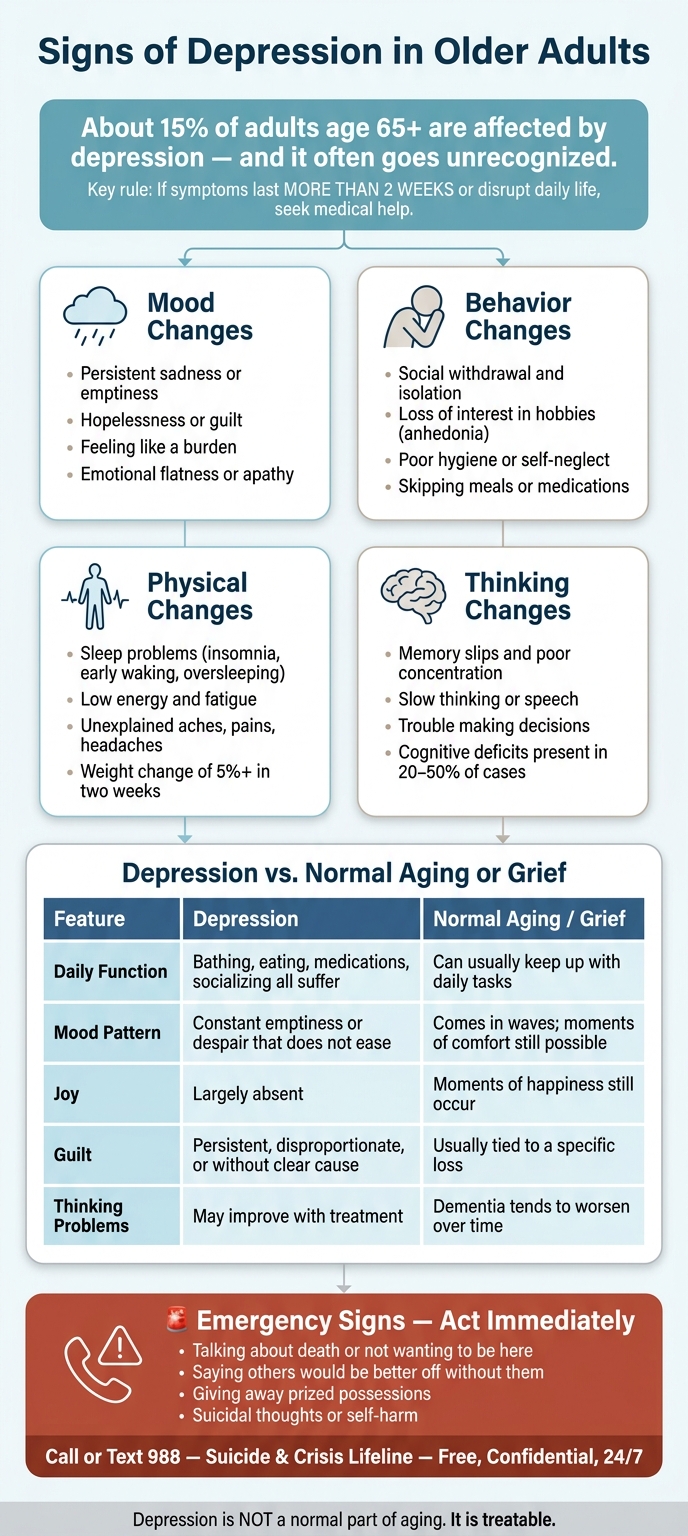
Signs of Depression in Older Adults vs. Normal Aging
Signs of Depression in Older Adults
Why Depression in Older Adults Is Easy to Miss
Depression in older adults often gets missed because it doesn't always start with sadness. A lot of the time, it shows up first as physical complaints. Doctors and family members may zero in on pain, sleep problems, or low energy while the mood disorder underneath slips by. This is sometimes described as depression showing up through physical symptoms or behavior changes.
Grief and big life shifts can muddy the picture too. Losing a spouse, leaving work, moving, or dealing with less independence can make depression seem like a normal response. But when symptoms stick around, it may point to a treatable condition, not just a rough stretch.
Chronic illness makes things even harder to sort out. Depression can look like fatigue, slowed movement, or memory loss. Those signs can overlap with other health problems, which is why depression is often mistaken for ordinary aging or illness.
Stigma adds another layer. Many older adults don't put the word depression on what they're feeling, and some may not ask for help at all. When symptoms aren't reported, treatment often doesn't happen.
Once you know what to look for, these missed signs become easier to spot. The next section breaks down the most common signs families notice first.
1. Persistent Sadness or Low Mood
A lasting low mood is one of the clearest signs of depression. But in older adults, it doesn’t always show up the way people expect. Some seniors won’t cry or say, “I feel sad.” Instead, they may seem emotionally flat, detached, or apathetic. In other words, depression in later life may not look like sadness at all.
When sadness is hard to spot, guilt, hopelessness, or a sense of being a burden can be the clue that stands out.
Emotional
The emotional signs are often easy to miss. A senior may say they feel empty, hopeless, anxious, guilty, or like they’re a burden to other people. These feelings tend to stick around. This isn’t just a bad day or two.
Behavioral
You may notice a slow pullback from daily life. Someone who used to stay in touch with family, follow their usual routines, or keep up with chores may start withdrawing or letting things slide.
If low mood isn’t obvious, pay close attention to guilt, hopelessness, or feeling like a burden. Those are often the clearest signs that this may be more than a rough stretch.
2. Hopelessness, Guilt, or Feeling Like a Burden
Older adults don't always say, "I feel hopeless." A lot of the time, it comes out sideways. They may apologize over and over, turn down help, or act like they don't matter anymore. Instead of asking for what they need, they may go quiet and stop asking at all.
Emotional
A senior may seem emotionally flat or say the future feels pointless. Guilt is common too, and it can be far out of proportion to the situation. In some cases, it isn't tied to one clear event. An older adult might feel guilty about a loved one's death or about needing care.
Behavioral
Watch for self-neglect. That can look like skipping showers, missing medications, eating less, or letting chores pile up. If a senior keeps apologizing for needing help or says they feel like a burden, that may point to more than everyday worry.
If an older adult says everyone would be better off without them, treat it as an emergency.
Depression can also show up as irritability, anxiety, or agitation.
3. Irritability, Anxiety, or Agitation
Not every older adult with depression looks sad. In many cases, it shows up as irritability, anxiety, or restlessness instead of clear sadness.
Emotional
A senior may seem emotionally flat, easily frustrated, or more short-tempered than usual. Some worry a lot about health or money, and reassurance doesn’t seem to calm those fears for long. Others may grow more distrustful.
Behavioral
Look for signs like restlessness, pacing, or trouble sitting still. Anger outbursts that feel out of character also deserve attention.
When irritability starts to spill into daily life and routines, the next warning sign is often a loss of interest in hobbies and everyday activities.
4. Loss of Interest in Hobbies and Daily Activities
One of the clearest warning signs is when an older adult stops caring about things that used to matter to them. In many cases, this loss of interest shows up before obvious sadness. This is often anhedonia, which means losing pleasure in activities a person once enjoyed. When depression goes untreated, it can also lead to less activity, less social contact, and a drop in physical function.
Emotional
The older adult may seem emotionally flat or numb. They might lose interest in hobbies, sex, or family roles that once meant a lot to them.
Behavioral
Self-neglect is another sign to watch for. That can look like skipping showers, forgetting medications, missing meals, or letting the home get messier than usual. Some depressed older adults also brush off concern with phrases like "It's too much trouble", "I don't feel well enough," or "I don't have the energy".
Physical
Fatigue often comes along with this loss of interest. Even simple daily tasks can start to feel too big to handle, and low energy can make activity feel out of reach.
Cognitive
Depression can also affect concentration and decision-making. At first glance, that may look like memory loss. When these changes show up together, depression may be a more likely cause than aging alone.
5. Social Withdrawal and Isolation
When interest starts to slip, social contact often slips with it. Pulling away from other people is one of the clearest signs of depression in older adults.
Emotional
Older adults with depression may stop reaching out, turn down help, and slowly cut themselves off from others.
Behavioral
Look for a steady drop in visits, phone calls, and activities they used to enjoy. Instead of saying they feel depressed, they may brush it off with comments like "It's too much trouble" or "I don't have the energy".
As isolation gets worse, sleep patterns and daily routines often start to shift too.
6. Sleep Changes
After withdrawal and isolation, sleep is often one of the first places depression shows up. And it’s easy to miss.
Changes in sleep are a common sign of depression in older adults, but they often get brushed aside. A sudden or lasting shift in sleep patterns, such as insomnia, waking up too early, oversleeping, or sleeping too much during the day, can be a warning sign. In many cases, a change in sleep is the first visible clue that mood is starting to shift.
Emotional
Older adults with depression may wake up early feeling anxious, and sleep problems often go along with a persistent empty mood.
Behavioral
Older adults with depression are more likely to have insomnia or early-morning waking than oversleeping. A caregiver might notice pacing at night, frequent waking, staying in bed most of the day, or a sleep schedule that has drifted out of sync.
Physical
Poor sleep can lead to daytime fatigue and low energy. In older adults, that tiredness can be easy to overlook or write off as part of aging.
Cognitive
Lack of sleep can also slow thinking, speech, and movement. These changes can look like dementia, but they may get better with treatment.
Sleep changes often show up along with shifts in appetite and energy.
7. Changes in Appetite, Weight, and Energy
Sleep changes often show up alongside a lower appetite and less energy. And that can be easy to brush off as “just aging.” But some patterns point more toward depression.
Emotional
Older adults don’t always seem openly sad. Sometimes they feel flat, numb, or unmotivated instead. That kind of emotional shutdown can drain the drive to eat, cook, or take part in everyday life.
Behavioral
You might notice a senior stop cooking, skip meals, or forget medications.
Physical
Unplanned weight loss or weight gain is a clear warning sign. A gain or loss of 5% of total body weight within a two-week period can signal depression. Depression can also show up as visible slowing, such as slower movement, slower speech, and less facial expression.
Low energy can affect more than the body. It can also slow thinking and make decisions harder.
Cognitive
Trouble staying focused during a conversation or planning a basic task can signal that cognitive energy has dropped. These changes can look like memory loss, but they may get better with treatment.
8. Unexplained Aches, Pains, and Physical Complaints
In older adults, depression doesn’t always show up as sadness. Sometimes it looks more like a headache that won’t let up, stomach trouble, or back pain that keeps hanging around. And when pain has no clear cause, or doesn’t get better with treatment, depression may be part of what’s going on.
Behavioral
Physical complaints can pull someone away from other people. A line like "I don't feel well enough" may sound purely medical on the surface, but at times it’s the outward sign of depression slowly shrinking a person’s daily life.
Physical
Common signs include headaches, stomach pain, back pain, joint aches, and digestive trouble. One red flag stands out: these symptoms don’t improve with standard medical treatment. Older adults may show depression through sleep changes, weight loss, or unexplained pain instead of sadness.
Cognitive
These body symptoms often show up alongside changes in thinking. Pain, fatigue, and other physical complaints can make it harder to focus, sort through choices, or think clearly. This pattern is sometimes called depression-related thinking problems.
9. Memory, Concentration, and Decision-Making Problems
Memory and decision-making problems are often brushed off as normal aging or mistaken for dementia. That mix-up happens a lot. Depression can look a lot like dementia, so families may not spot what’s going on. And depression doesn’t just affect mood or behavior. It can also affect how a person thinks. Cognitive deficits are present in 20% to 50% of late-life depression cases.
Cognitive
These changes often show up in planning, organizing, and decision-making. A person may have trouble staying on task, following a set of steps, or making even simple choices. Depression can also disrupt attention and short-term memory. This pattern is sometimes called depression-related executive dysfunction.
Timing matters here. If these thinking problems show up suddenly, or appear along with low mood, depression is more likely than aging alone. Poor sleep, fatigue, and low motivation can also make the thinking problems seem worse.
Emotional
Older adults with depression often notice these memory problems and feel scared by them. Many feel ashamed or worry that they are "losing their mind." Some start blaming themselves for small mistakes or feel unusually embarrassed when they forget things.
Behavioral
Trouble concentrating can make conversations and everyday tasks feel like too much. Families may notice the person pulling back from duties they used to manage without trouble. They may miss appointments, skip bills, or need more help than usual with routine tasks. If someone doesn’t engage much during medical visits or memory checks, that can also be a clue.
Physical
Slowed speech, a flat facial expression, and sluggish movement are common. Some older adults show the opposite pattern: restlessness and an inability to sit still.
If thinking problems come with deeper hopelessness, the next warning sign is especially urgent.
10. Thoughts of Death or Suicide
When hopelessness shifts into thoughts of death or suicide, act right away. This is an emergency warning sign. Adults age 65 and older account for more than 25% of suicides in the U.S., so take any mention of death, self-harm, or “not wanting to be here” seriously.
Emotional
Look for hopelessness or despair that doesn’t ease up. In some cases, an older adult may seem emotionally flat instead of openly sad.
Behavioral
Pay attention to withdrawal from loved ones, giving away prized possessions, or using more alcohol or drugs. If you notice these signs, treat them like an emergency, not something to wait out.
Cognitive
Repeated thoughts about death or suicide are major warning signs.
Ask directly about suicidal thoughts. Doing so does not increase risk, and it can help the person open up.
If an older adult is in crisis, call or text 988 or go to the nearest emergency room at once. Do not leave them alone.
Depression vs. Normal Aging or Grief
Not every low mood in later life means depression.
Normal aging can bring occasional forgetfulness, a slower pace, and physical changes. Grief after losing a spouse, partner, or close friend is also a natural response. It often comes in waves, with painful days mixed with moments of comfort, warmth, or even laughter.
Depression feels different. Instead of coming and going, it often shows up as a steady sense of emptiness or despair that doesn't ease up.
One of the clearest ways to tell grief from depression is to look at daily life. A grieving person can usually still bathe, eat, take medications, and stay in touch with other people, even if doing those things takes effort. But when those basic routines start to fall apart, depression becomes more likely.
Also, depression in older adults doesn't always look like sadness. It may show up as irritability, fatigue, or physical complaints instead.
| Feature | Normal Grief | Depression |
|---|---|---|
| Ability to function | Can usually keep up with daily tasks | Bathing, eating, medications, and socializing all suffer |
| Joy | Moments of happiness are still possible | Joy is largely absent |
| Guilt | Usually tied to a specific loss | Persistent worthlessness or inappropriate guilt |
When these changes stick around and begin to affect day-to-day life, depression is more likely than normal aging or grief.
Quick Symptom Guide
After the detailed signs above, use this table to compare depression with normal aging and other common health problems. The main thing to watch for is patterns that stick around and start getting in the way of daily life.
| Category | Signs of Depression | Typical Aging or Another Health Problem | When to Seek Evaluation |
|---|---|---|---|
| Emotional | Persistent empty mood, hopelessness, or guilt | Temporary sadness after a loss; occasional blue days that pass | Feelings last more than 2 weeks, or include thoughts of death or suicide |
| Behavioral | Social withdrawal, neglecting hygiene, loss of interest in usual activities | Choosing fewer social activities; slower movement from arthritis or pain | The person stops bathing, eating regularly, or joining usual activities |
| Physical | Unexplained aches, pains, or digestive issues that persist despite treatment; noticeable weight loss or gain | Fatigue tied to a specific illness; gradual, age-related changes in appetite or minor sleep changes | Physical complaints persist despite medical care, or appetite drops sharply |
| Cognitive | New memory or focus problems that affect daily function | Occasionally misplacing keys; taking a little longer to learn new things | Memory or focus problems interfere with safety, managing medications, or finances |
One key difference: depression-related thinking problems often get better with treatment. Dementia, on the other hand, tends to get worse over time.
A good rule of thumb is the two-week mark across all four categories. When symptoms last longer than two weeks and start to interfere with daily functioning, it is time to talk with a doctor.
When to Seek Professional Help
If the symptoms above - mood changes, withdrawal, sleep changes, appetite changes, or thinking problems - last more than two weeks or begin to affect day-to-day life, it’s time to contact a primary care provider, geriatrician, or mental health professional.
A proper evaluation often includes a physical exam, medical history, medication review, and basic lab work to rule out thyroid issues, vitamin deficiencies, anemia, and other conditions that can look like depression. Providers may also use the Geriatric Depression Scale (GDS) to check symptom severity. If no medical issue explains the changes, the next step is a referral for mental health care.
It helps to come prepared. Bring a full list of:
- Prescription medications
- Supplements
- Over-the-counter products
If the person seems withdrawn or confused, a family member can step in and share a clearer picture of what has changed.
BestLife Counseling offers in-home and outpatient therapy, along with APN support for psychiatric evaluations, medication management, and counseling.
If the concern involves thoughts of death or self-harm, don’t wait for a routine visit. Act right away. If someone has repeated thoughts of death or suicide, or makes an attempt, they need emergency psychiatric care immediately. Call or text the 988 Suicide & Crisis Lifeline at 988 for free, confidential support 24/7.
Conclusion
The signs covered in this guide can be easy to miss. But they matter. In older adults, depression often shows up through changes in mood, behavior, and physical health, not through obvious sadness or crying. That’s a big reason it so often goes unnoticed.
The good news is that most older adults get better with proper diagnosis and treatment. Treatment can help with mood, and it can also improve thinking.
Self-neglect, pulling away from others, or any mention of death needs immediate attention. Depression is not a normal part of aging, and it’s not something a person can simply push through alone.
If you’re worried, trust the changes you’re seeing. Start with their doctor. If there are thoughts of death or self-harm, call or text 988 right away.
FAQs
How is depression different from dementia?
Depression and dementia can look a lot alike in older adults. Both can lead to cognitive decline and make it hard to focus, think clearly, or keep track of things.
In some cases, untreated depression can cause severe cognitive symptoms. This is often called pseudodementia.
The big difference is that, unlike dementia, these symptoms may improve with treatment. Depression can also show up as an early warning sign of dementia, and the two conditions often happen at the same time.
When should I worry about symptoms?
Be concerned if sadness, irritability, or other signs of depression last more than two weeks and start to disrupt daily life, relationships, or basic self-care. That’s the point where it’s smart to take it seriously, not brush it off.
In older adults, depression doesn’t always look like obvious sadness. It can show up as physical complaints, fatigue, or changes in thinking and memory. So don’t write it off as a normal part of aging.
Talk to your primary care provider to check for medical causes or medication side effects. If there are recurring thoughts of death or suicide, seek emergency psychiatric evaluation immediately.
What should I do if my loved one refuses help?
Be patient. And don’t brush off their feelings or label them as weak. They may view depression in a different way, so it helps to move with care.
Try bringing up therapy or medical support धीरे over time. Use "I" statements to share what you’ve noticed and how you feel, without sounding accusatory. For example:
"I’m worried about you, and I want to help."
It can also help to keep them connected to other people, spend time with them in activities that matter to them, and offer support with the next step. That might mean helping schedule an appointment or going with them.
BestLife Counseling provides in-person mental health services, including individual and couples therapy.