

Caregiver burnout can build fast, and mindfulness can help slow it down. If you care for someone with mental illness, disability, or age-related illness, even 1–5 minutes a day of simple breathing, grounding, or body awareness can help you catch stress earlier, calm your body, and feel less stuck in survival mode.
Here’s the short version:
- More than 1 in 3 caregivers feel overwhelmed
- Burnout often shows up as deep fatigue, irritability, poor focus, guilt, numbness, and bad sleep
- Mindfulness helps by creating a small pause between stress and reaction
- Short tools like box breathing, body scans, and the 5-4-3-2-1 method can fit into a busy day
- If you have panic, severe insomnia, substance use, or thoughts of self-harm, mindfulness alone is not enough
This article makes one point clear: mindfulness will not remove caregiving stress, but it can lower the strain it puts on your mind and body. Research in caregiver and helping-profession groups shows lower emotional exhaustion after mindfulness-based programs, including a 2025 meta-analysis of 16 randomized controlled trials.
What I take from this is simple: small, repeatable pauses can help more than waiting for a full day off that may never come. And when the stress keeps building, it is time to add outside support.
Cultivating Mindfulness for Well-being Among Caregivers
What caregiver burnout looks like
Caregiver burnout usually doesn't hit all at once. It creeps in. First comes the deep tiredness. Then irritability. Then that flat, numb feeling where even a hard moment doesn't land the way it used to. You sleep, but it never feels like enough.
At first, the signs can be easy to brush off. Maybe you're snapping more than usual. Maybe your focus is off and you're forgetting appointments. Maybe you feel guilty when you want a break, then guilty again because you think you should be more present. After a while, emotional exhaustion and a sense of hopelessness can settle in. That doesn't mean you've stopped caring. It means you've been running on empty for too long. Those changes are often early signs that your nervous system needs a reset.
And here's the hard truth: a weekend off usually isn't enough to repair what months of chronic stress have worn down.
Why caregivers are at high risk
Caregiving is relentless. You're making dozens of decisions, managing medications, setting up appointments, dealing with hard behaviors, and carrying the emotional weight of someone else's suffering. On top of that, you still have your own home and life to manage.
Even when each task looks small on its own, the constant state of alertness wears you down. Your nervous system stays switched on, always watching for the next problem before the last one is even done. Add financial pressure, limited help, and the slow loss of your own hobbies and close relationships, and burnout becomes much more likely. As caregiving demands increase, many caregivers get less of the recovery time they need.
How burnout affects caregiving and family life
When burnout takes hold, it doesn't stay contained. It spills into everything else. Patience gets thin. Small problems spark bigger reactions. The people around you - a partner, a child, a close friend - start to feel that distance. You're there physically, but mentally, you're somewhere else.
Self-care is often the first thing to go. Doctor visits, exercise, and time with friends can start to feel like extras you can't afford. But cutting them out drains you even more. Burnout narrows your focus until all you can see is the next urgent task. That makes it harder to respond with patience or flexibility when it matters most.
These warning signs also create an opening. They're often the first moments when mindfulness can help you notice the pattern sooner and interrupt the stress cycle before burnout gets deeper.
How mindfulness reduces stress and burnout
Mindfulness can ease caregiver burnout because it lowers the stress response that keeps you stuck in survival mode. It doesn't remove the demands of caregiving. What it can do is dial down the stress those demands set off. When you're in constant alert mode, your body doesn't get a proper reset. Mindfulness helps interrupt that cycle and gives you a brief mental and physical reset.
Research backs this up. An 8-week caregiver program reduced burden at 3 months, and a 2025 meta-analysis of 16 randomized controlled trials found lower emotional exhaustion and emotional detachment in helping professions . That change often begins with small shifts in attention and breathing.
How mindfulness changes the stress response
The change mindfulness brings usually isn't dramatic. It's more like a small space between the stressor and your reaction. In that space, lower reactivity and less emotional strain can start to happen.
"Mindful awareness creates a pause to make room for deliberate choices instead of being swept away by exhaustion." - Robin Stern Ph.D., Co-founder of Yale Center for Emotional Intelligence
Even simple steps can help. Naming the feeling - frustration, guilt, anger - can lower emotional reactivity. Slower breathing, with the exhale a bit longer than the inhale, can help your body settle. Mindfulness can also cut down rumination, that mental replay loop that wears caregivers down over time . These effects tend to work best when mindfulness slips into things you already do.
Why present-moment attention helps busy caregivers
Mindfulness doesn't need a quiet hour or a perfect setup. That matters when your mind is getting pulled in ten directions by worry, guilt, and constant problem-solving. Daily routines can become your entry point: washing dishes, driving, or waiting in line. Even a few grounded seconds can keep stress from building into something heavier.
Mindfulness practices that fit daily caregiving
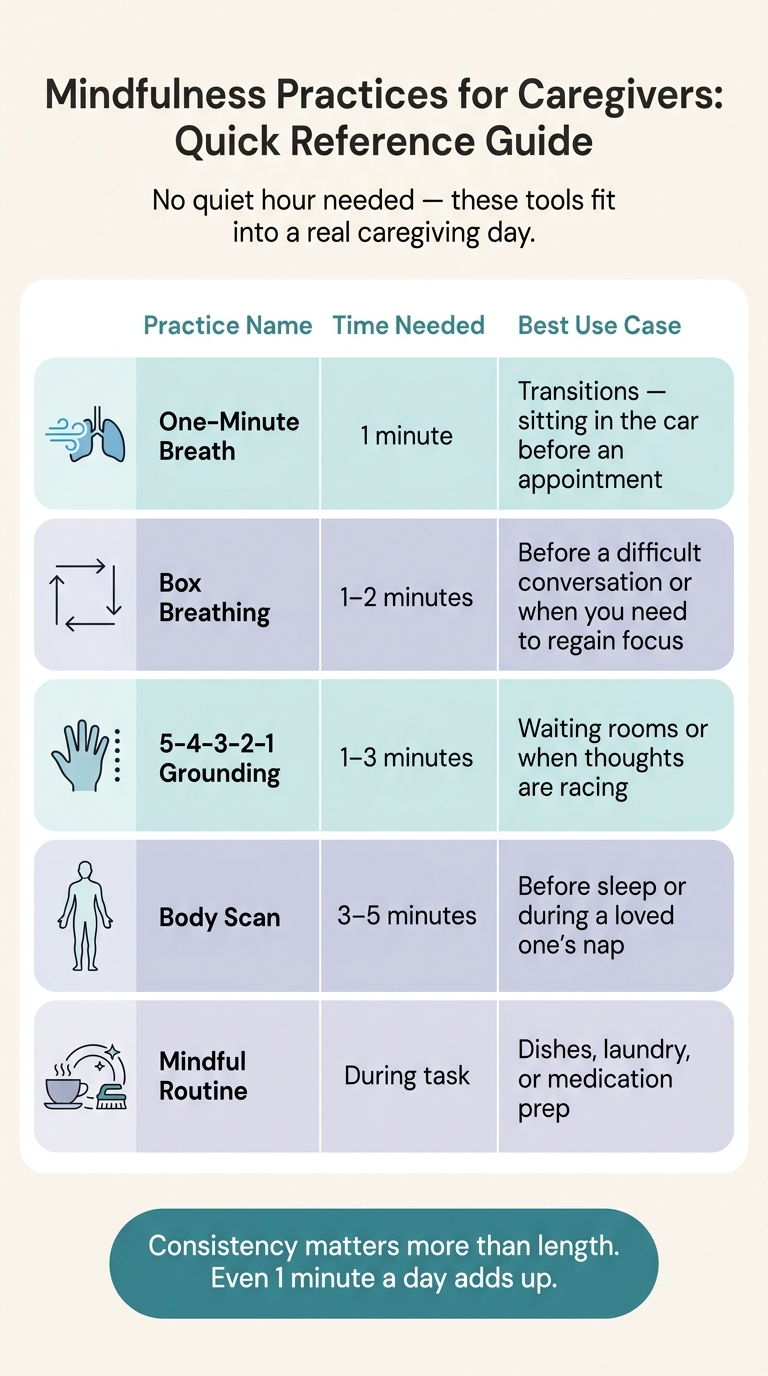
Mindfulness Practices for Caregivers: Quick Reference Guide
You don't need a 30-minute meditation session - or even a full hour - to practice mindfulness. In caregiving, the best tools are often the small ones: short resets you can use in the middle of a busy, messy, very normal day.
Quick breathing and grounding exercises
A short breathing reset can help before a hard conversation, after an appointment, or in the gap between tasks. Box breathing is a simple place to start: inhale for 4 counts, hold for 4, exhale for 4, then hold for 4 again. If you need something even simpler, make your exhale a little longer than your inhale, like 4 counts in and 6 counts out.
And if breathing alone isn't doing the job, bring your attention back to your body.
Body scans and mindful pauses during daily routines
A body scan doesn't need silence, a yoga mat, or even a place to lie down. Just notice where you're holding tension - tight shoulders, a clenched jaw, hands that won't stop gripping - and let it go on the exhale.
If your thoughts start spinning, the 5-4-3-2-1 grounding method can help pull you back to what's in front of you. Name 5 things you can see, 4 you can touch, 3 you hear, 2 you smell, and 1 you taste. It's a good fit for waiting rooms, parking lots, and those odd little pauses in between.
Daily chores can help too. Pay attention to the warmth of dishwater, the smell of coffee, or the feel of folded laundry. That small shift moves your mind away from worry and back to the present. These moments may seem minor, but they stack up.
How to build a repeatable daily habit
The easiest way to make mindfulness stick is to connect it to routines that already happen - before coffee, after school pickup, or at bedtime. Consistency matters more than length.
| Practice | Time Needed | Best Use |
|---|---|---|
| One-Minute Breath | 1 minute | Transitions - sitting in the car before an appointment |
| Box Breathing | 1–2 minutes | Before a difficult conversation or when you need to regain focus |
| 5-4-3-2-1 Grounding | 1–3 minutes | Waiting rooms or when thoughts are racing |
| Body Scan | 3–5 minutes | Before sleep or during a loved one's nap |
| Mindful Routine | During task | Dishes, laundry, or medication prep |
If the strain keeps building, mindfulness should be just one part of the plan.
When mindfulness is not enough
Mindfulness can help in the early stages of burnout. It may help you spot stress sooner and bounce back after hard days. But when burnout gets more severe, mindfulness on its own usually isn't enough. At that point, professional support matters.
Signs it is time to seek professional support
It may be time to get professional help if you notice persistent insomnia, emotional numbness, frequent crying, dread about the day, pulling away from other people, trouble handling daily tasks, substance use, or losing interest in anything outside caregiving.
If you have panic attacks, thoughts of self-harm, or any urge to harm the person you care for, call or text 988 right away.
Local in-person support options
When burnout starts getting in the way of daily life, in-person counseling can help you recover and feel more steady. In South Jersey, BestLife Counseling offers in-home and outpatient therapy, individual and couples therapy, trauma-focused care, and APN services for psychiatric evaluations and medication management.
FAQs
How quickly can mindfulness help caregiver burnout?
Mindfulness can help with caregiver burnout right away because it doesn’t take long sessions or any special equipment. Even 60 seconds of paying close attention, or a five-minute breathing exercise, can create a small pocket of calm.
Those short pauses, repeated through the day, can help reset your nervous system, lower stress hormones, and ease exhaustion over time. What matters most is doing it often, not doing it for a long time.
What if mindfulness makes me feel more anxious?
It’s normal for mindfulness to feel hard, especially if sitting still makes your anxiety spike. The point isn’t to do it perfectly. Start small and meet yourself where you are.
You might set a timer for five minutes and keep it simple. If sitting quietly feels like too much, try a more active approach instead, like mindful walking, light stretching, or paying close attention to your breathing. You can stop at any time, and if you need more support, it’s okay to reach out to a mental health professional. BestLife Counseling offers in-person therapy for anxiety and caregiving stress.
How do I know when I need more than mindfulness?
Mindfulness can help with stress. But it’s not a replacement for professional support when things start to feel too heavy.
You may need more help if you’re dealing with lasting emotional or physical exhaustion, hopelessness, major shifts in sleep or appetite, or growing irritability and withdrawal. If anxiety or depression feels unmanageable, or you can’t keep up with daily responsibilities, it’s time to seek professional care.