Daily exposure to daylight directly impacts your mental health by regulating your internal clock, mood, and sleep. When daylight patterns shift - like during winter or due to indoor lifestyles - it can disrupt this balance, leading to issues like depression, low energy, or poor sleep.
Key Takeaways:
- Body Clock & Mood: Your brain uses light to align sleep-wake cycles. Misalignment can lead to mood disorders like Seasonal Affective Disorder (SAD).
- Daylight & Sleep: Bright daylight improves sleep quality and energy. Lack of it can delay sleep and cause fatigue.
- SAD Symptoms: Oversleeping, cravings, and low mood often peak in January and February.
- Light Therapy: A 10,000-lux light box can help reset your internal clock and ease symptoms.
- Lifestyle Tips: Morning light exposure, outdoor time, and consistent sleep schedules are simple ways to improve mental health.
If symptoms persist beyond two weeks, professional help may be necessary. Early action can prevent seasonal mood changes from escalating.
How Daylight Exposure Affects Sleep, Energy, and Mental Health: Key Statistics
How Daylight Changes Affect Sleep and Energy
Research on Sleep Problems and Daylight
Exposure to bright light during the day plays a crucial role in keeping your internal clock in sync. Without enough daylight - especially during winter months or extended periods indoors - your sleep patterns can shift, and your mental health can take a hit.
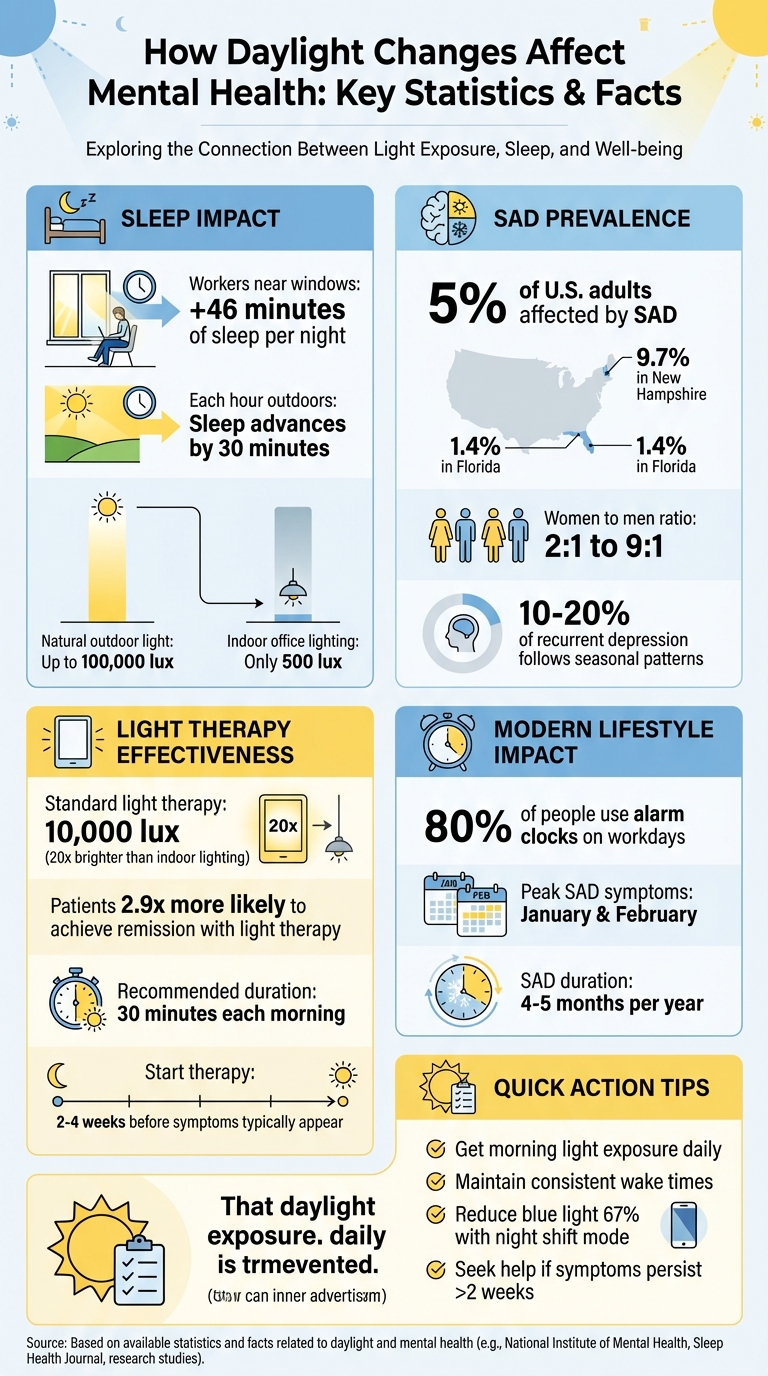
A study conducted from 2014 to 2017 examined 109 office workers across five federal buildings and found some striking results. Workers who had high exposure to morning light reported better sleep quality and lower depression scores. Those seated near windows, where they received more natural light, enjoyed an extra 46 minutes of sleep per night compared to colleagues in windowless spaces.
Interestingly, spending more time outdoors can significantly impact your sleep timing. For every additional hour spent outside, sleep timing advances by about 30 minutes. This is because natural outdoor light can reach intensities up to 100,000 lux, while indoor office lighting typically hovers around a mere 500 lux - far below what’s needed to effectively signal your circadian system.
These disruptions to your sleep aren’t just confined to the night - they can spill over into your daytime performance, too.
Effects on Energy and Productivity
When your exposure to daylight drops, your energy levels and productivity often follow. Shorter daylight hours in the winter can cause your body to produce melatonin for longer periods, extending what researchers call the "biological night." This hormonal shift can leave you feeling drained, unmotivated, and unable to focus - even during the hours when you’d normally feel most alert.
The impact on daily functioning is significant. For instance, in a study conducted in Reston, Virginia, residents who had limited access to daylight due to standard blinds experienced delayed sleep onset, lower energy levels, and reduced feelings of positivity.
"Daylight is an ideal light source for promoting circadian alignment due to its natural 24 h cycle, high light levels, and spectral power distribution which provides the proper circadian stimulus at all times of day." – Rohan Nagare, Light and Health Research Center
Modern habits only make this problem worse. About 80% of people rely on alarm clocks to wake up on workdays, which disrupts their natural sleep patterns and creates what experts call "social jet lag". This ongoing misalignment between your internal clock and daily schedule can lead to a vicious cycle of poor sleep, daytime fatigue, and lower productivity - especially during the darker months of the year.
How light exposure affects circadian rhythms and mental health | Peter Attia and Andrew Huberman
Daylight and Seasonal Affective Disorder (SAD)
A lack of daylight can throw off our internal clocks, leading to Seasonal Affective Disorder (SAD).
What is Seasonal Affective Disorder?
Seasonal Affective Disorder, or SAD, is a type of depression that recurs annually, lasting about 4–5 months each year. The most common form, winter-pattern SAD, typically starts in late fall or early winter as daylight hours shrink. Around 5% of adults in the U.S. are affected by SAD, though its prevalence depends on location. For instance, it affects about 1.4% of people in Florida but jumps to 9.7% in New Hampshire.
People with SAD often experience symptoms like oversleeping, intense cravings for carbohydrates, weight gain, and social withdrawal. Women are diagnosed with SAD more often than men, with ratios ranging from 2:1 to as high as 9:1. The darkest months of the year - January and February - are usually the most challenging for those dealing with this condition, especially in the Northern Hemisphere.
Research Findings on SAD and Light Exposure
Reduced daylight has a direct impact on the brain. It lowers serotonin levels, which are crucial for regulating mood, while increasing melatonin, a hormone that promotes sleepiness.
"The depression associated with SAD is related to changes in daylight hours, not the calendar." – National Institute of Mental Health
Studies suggest that 10% to 20% of all recurrent depression cases follow a seasonal pattern. The severity of SAD often correlates with latitude - the farther you live from the equator, the shorter the winter days, and the higher your risk. Less sunlight also contributes to Vitamin D deficiency, which can interfere with serotonin activity and worsen depressive symptoms.
Light therapy has proven to be a powerful tool for managing SAD. Using a 10,000-lux light box has been shown to make patients nearly 2.9 times more likely to achieve remission compared to those in control groups. These findings highlight the critical role of light exposure in alleviating SAD symptoms and improving overall well-being.
Strategies to Manage the Effects of Daylight Changes
Small daily adjustments can make a big difference in how you feel during the darker months. By incorporating a few simple strategies, you can help reset your internal clock and improve your overall mood.
Light Therapy and Its Benefits
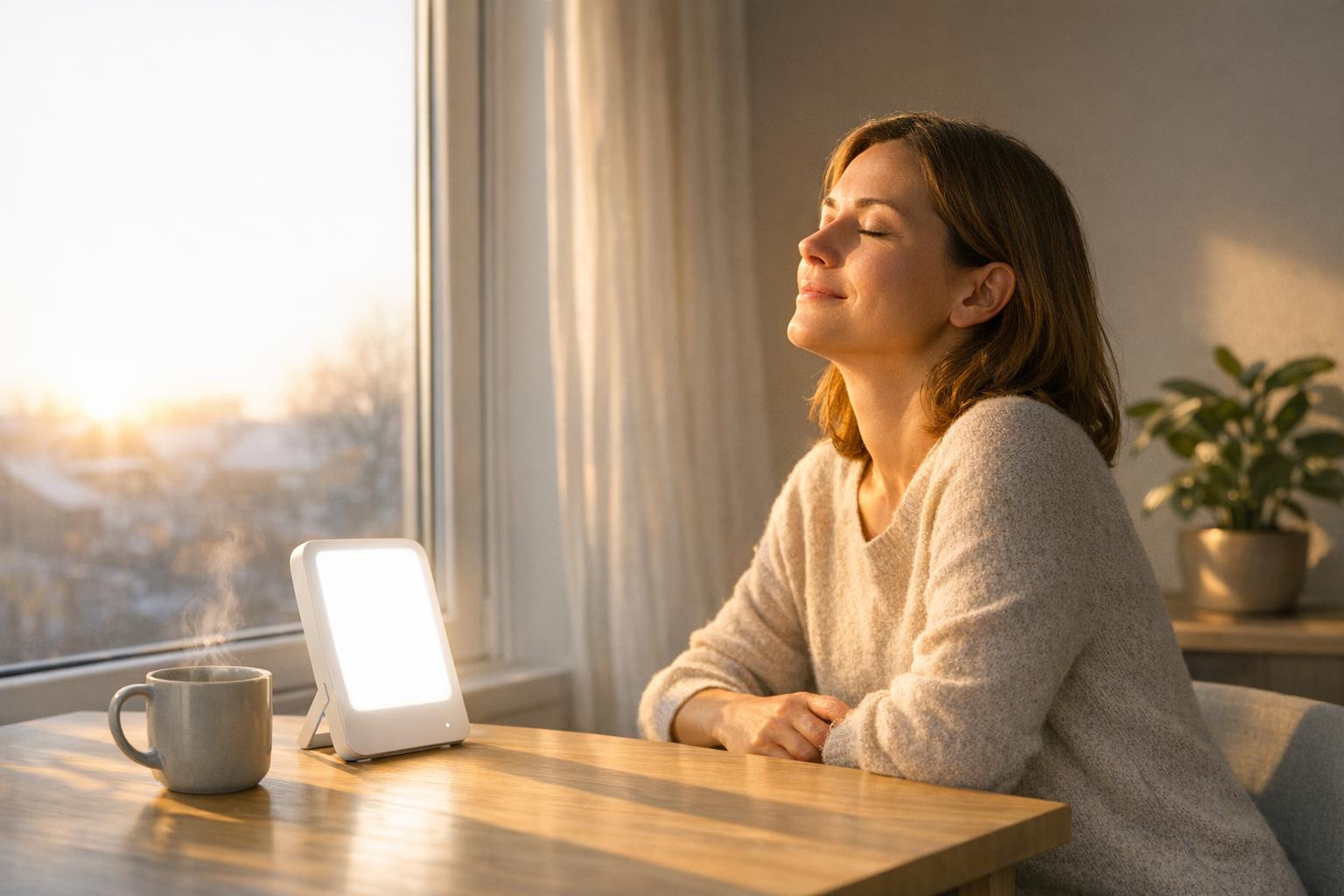
Light therapy works by stimulating specific cells in your retina that send signals to your brain's internal clock. This process helps regulate your circadian rhythm, mood, and sleep cycles. A typical light therapy box emits 10,000 lux, which is about 20 times brighter than standard indoor lighting.
"What light therapy does is compensate for the lack of exposure that we get from natural sunlight." – Adam Borland, PsyD, Psychologist, Cleveland Clinic
Clinical studies show that bright light therapy can be highly effective. Patients using this treatment are 2.9 times more likely to achieve clinical remission from Seasonal Affective Disorder (SAD) compared to those using a placebo. To use light therapy, position a 10,000-lux light box slightly off to the side of your face and use it for 30 minutes each morning. For best results, start therapy two to four weeks before you typically notice SAD symptoms. However, if you have bipolar disorder, consult your doctor beforehand, as light therapy can sometimes trigger manic episodes.
Lifestyle Changes to Support Mental Health
Adjusting your daily habits can also help balance your internal clock. Morning light exposure is particularly effective for resetting your circadian rhythm. Spending even one hour outdoors in the morning can work as well as a 10,000-lux light box, with each additional hour outdoors advancing your sleep schedule by about 30 minutes. Even on cloudy days, outdoor light is much brighter than indoor lighting.
You can enhance your exposure to natural light by opening blinds, trimming trees that block sunlight, or setting up your workspace near windows. Increased exposure to daylight has been linked to earlier sleep onset and more stable sleep patterns.
Stick to a consistent wake-up time every day, even on weekends, and avoid sleeping in or taking long naps during the winter months. Physical activity, especially outdoors during daylight hours, can help reduce stress and anxiety caused by seasonal changes. In the evenings, dim household lights and limit screen time for at least two hours before bed to support natural melatonin production. Using the "night shift" mode on your phone can reduce blue light exposure by about 67%.
"It's really common for people to feel down during the winter. Whether you just have the winter blues, depression, or SAD - practicing good sleep habits, exercising, and spending some time outdoors will universally help people feel better." – Dustin Cotliar, MD, MPH
Getting Professional Support
If feelings of sadness or mood changes persist for more than two weeks and interfere with your daily life, it’s time to seek professional help. A diagnosis of SAD typically requires depressive episodes to occur during specific seasons for at least two consecutive years, often due to circadian rhythm disruptions. Your doctor may perform a physical exam, lab tests to rule out other conditions, and a psychological evaluation.
Treatment options include light therapy, Cognitive Behavioral Therapy (CBT), antidepressants, and Vitamin D supplements. While light therapy often shows results within days, CBT can provide longer-lasting benefits by preventing symptom recurrence in future winters. CBT for SAD focuses on "behavioral activation", encouraging you to plan enjoyable activities to counter feelings of isolation during the darker months.
For personalized support, BestLife Counseling (https://bestlifenj.com) offers in-home and outpatient therapy services to help you manage seasonal mood changes. Their team specializes in anxiety, depression, and trauma-focused care, including cognitive-behavioral therapy and mindfulness techniques. They also provide psychiatric evaluations and medication management through Advanced Practice Nurse (APN) services. Taking proactive steps now can help you maintain better mental health throughout the year.
Conclusion: Taking Action to Protect Your Mental Health
As research on circadian rhythms suggests, taking proactive steps now can help safeguard your mental health during seasonal changes. Studies indicate that about 5% of Americans experience Seasonal Affective Disorder (SAD), with many others feeling the more subtle effects of reduced daylight, such as shifts in mood, energy, and sleep patterns. Acting early can prevent these symptoms from escalating.
Simple habits can make a big difference. Prioritize exposure to morning light, maintain a consistent sleep schedule, and spend time outdoors daily to help regulate your internal clock. If you’ve noticed seasonal mood changes in the past, starting light therapy or other preventive strategies two to four weeks before symptoms usually appear can be especially effective.
If lifestyle adjustments aren’t enough, seeking professional support is essential. Persistent feelings of sadness, hopelessness, or a lack of interest in daily activities lasting more than two weeks - and affecting your work, relationships, or daily life - are signs it’s time to reach out. BestLife Counseling (https://bestlifenj.com) offers in-home and outpatient therapy tailored to seasonal mood changes, anxiety, and depression. Their services include cognitive-behavioral therapy, psychiatric evaluations, and medication management to create a personalized treatment plan.
For immediate help during a mental health crisis or if you’re experiencing thoughts of self-harm, call or text 988 right away. Whether through small lifestyle changes, light therapy, or professional counseling, taking action can significantly impact how you feel throughout the year.
FAQs
What are the signs of Seasonal Affective Disorder (SAD)?
Seasonal Affective Disorder (SAD) often brings symptoms like persistent sadness or hopelessness, a loss of interest in activities you usually enjoy, low energy levels, excessive sleep, cravings for carbs, and sometimes weight gain. These symptoms tend to show up during the fall and winter months, although they can occasionally occur in spring and summer, and they typically last for at least two weeks.
If you’ve noticed these changes in yourself, scheduling an in-person evaluation with a mental health provider, such as BestLife Counseling, can help confirm whether it’s SAD and discuss treatment options. The good news? SAD is treatable, and reaching out for support is a key step toward feeling better.
How can I get more natural daylight while indoors?
Spending time in natural daylight, even when you're indoors, can do wonders for your mood and mental well-being. Here are some simple ways to bring more natural light into your daily routine:
- Set up near windows: Position your desk, chair, or favorite reading nook in a spot that gets plenty of sunlight during the day.
- Start your day with daylight: Aim to spend 30–60 minutes in a naturally lit area between 8:00 AM and 10:00 AM. This timeframe is ideal for soaking up the benefits of morning light.
- Cut back on artificial lighting: Whenever possible, turn off overhead lights and let sunlight brighten your space instead.
- Wind down with softer light: As evening approaches, switch to dimmer, softer lighting to help your body transition naturally toward rest.
If you're looking for more personalized mental health support, local providers like BestLife Counseling can be a great resource. They offer in-person therapy and wellness strategies that can complement your efforts to include more daylight in your routine.
Can light therapy help improve mood and sleep?
Light therapy is often used to uplift mood, particularly for those experiencing seasonal affective disorder (SAD) or other types of depression. Beyond mood improvement, it has been found to enhance sleep quality and ease insomnia symptoms by helping to regulate the body’s natural circadian rhythm. That said, while some individuals turn to red-light therapy for sleep, research on its effectiveness is still limited and inconsistent.
If you’re thinking about trying light therapy, it’s a good idea to consult a mental health professional to find the most suitable plan for your situation. Services like BestLife Counseling provide tailored support for mental health challenges, including therapy for anxiety, depression, and sleep-related issues.