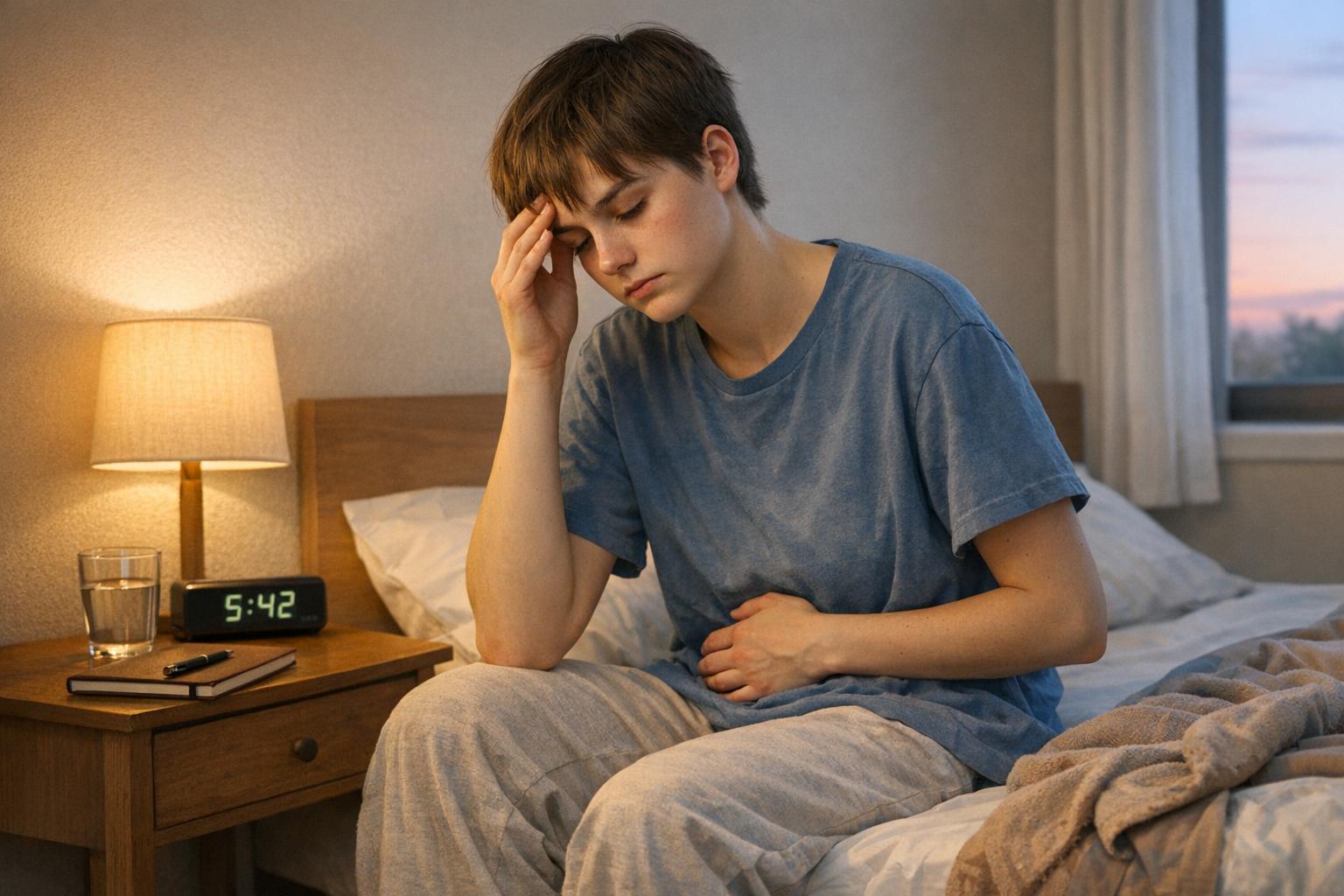
Teen anxiety and depression often manifest as physical symptoms before emotional struggles are clearly expressed. Recurring headaches, stomachaches, fatigue, and sleep disturbances are common. These symptoms may stem from changes in brain chemicals like serotonin and dopamine, as well as stress responses like the fight-flight-freeze mechanism.
Key points to know:
- Anxiety symptoms: Stomach pain, headaches, muscle soreness, nausea, fatigue, and trouble sleeping. These may result from stress hormones affecting the brain-gut connection.
- Depression symptoms: Persistent fatigue, sleep issues (insomnia or oversleeping), appetite changes, unexplained pain, and slowed or restless movements.
- Overlap: Fatigue, headaches, and trouble sleeping are shared symptoms. Depression typically shows as long-term energy loss and appetite changes, while anxiety is more immediate and trigger-specific.
If symptoms persist for weeks or interfere with daily life, consult a pediatrician to rule out medical causes and consider mental health support. Early intervention can help address both emotional and physical aspects of these conditions.
Signs of Depression and Anxiety in Children and Adolescents
Physical Symptoms of Teen Anxiety
Recognizing the physical signs of anxiety in teens is an important step toward addressing their mental health needs.
How Anxiety Triggers Physical Responses
When teens feel anxious, their bodies activate the fight-flight-freeze response - a natural survival mechanism that releases stress hormones like cortisol and adrenaline. While this response is beneficial in short bursts, chronic anxiety can keep the body stuck in this heightened state, which can lead to physical strain over time.
One key player in this process is the brain-gut axis, which connects the brain and digestive system. This connection explains why anxiety often causes stomach pain - it’s a real biological reaction. The activation of the HPA axis (hypothalamic-pituitary-adrenal axis) during anxiety can trigger inflammation and disrupt gut bacteria, making the digestive system more sensitive.
"Addressing anxiety in pediatric patients aged 6–18 years could potentially alleviate their GI symptoms." - Scientific Reports
These biological mechanisms often show up as noticeable physical symptoms, which are outlined below.
Common Physical Symptoms of Anxiety
The physical effects of anxiety in teens can sometimes resemble other health conditions. Some of the most common symptoms include fatigue, sleep problems, stomach pain, headaches, muscle soreness, and nausea.
| Physical Symptom | Prevalence in Anxious Teens |
|---|---|
| Fatigue / Low Energy | 65.7% |
| Trouble Sleeping | 53.9% |
| Stomach Pain | 48.9% |
| Headaches / Muscle Soreness | Frequently reported |
| Nausea | Frequently reported |
Another symptom to note is difficulty swallowing, also known as dysphagia. Teens with anxiety are nearly three times more likely to experience somatic symptoms like these.
Somatic Complaints and Their Triggers
Anxiety doesn’t just cause direct physical reactions - it can also lead to somatic symptoms, which are physical complaints without an identifiable medical cause. Around 32.3% of adolescents report experiencing somatic symptoms at a clinically significant level. These symptoms are often the main reason teens visit the doctor, even though the root issue is emotional distress.
Academic pressure is a major trigger for these symptoms, especially in competitive school settings. Other contributors include social stress, uncertainty about the future, and lack of physical activity. Poor sleep also plays a role, mediating about 11.13% of the link between anxiety and gastrointestinal issues. This highlights the importance of addressing both the emotional and physical aspects of anxiety. Providers like BestLife Counseling focus on uncovering these underlying causes to offer targeted support for teens dealing with anxiety-related physical symptoms.
Physical Symptoms of Teen Depression
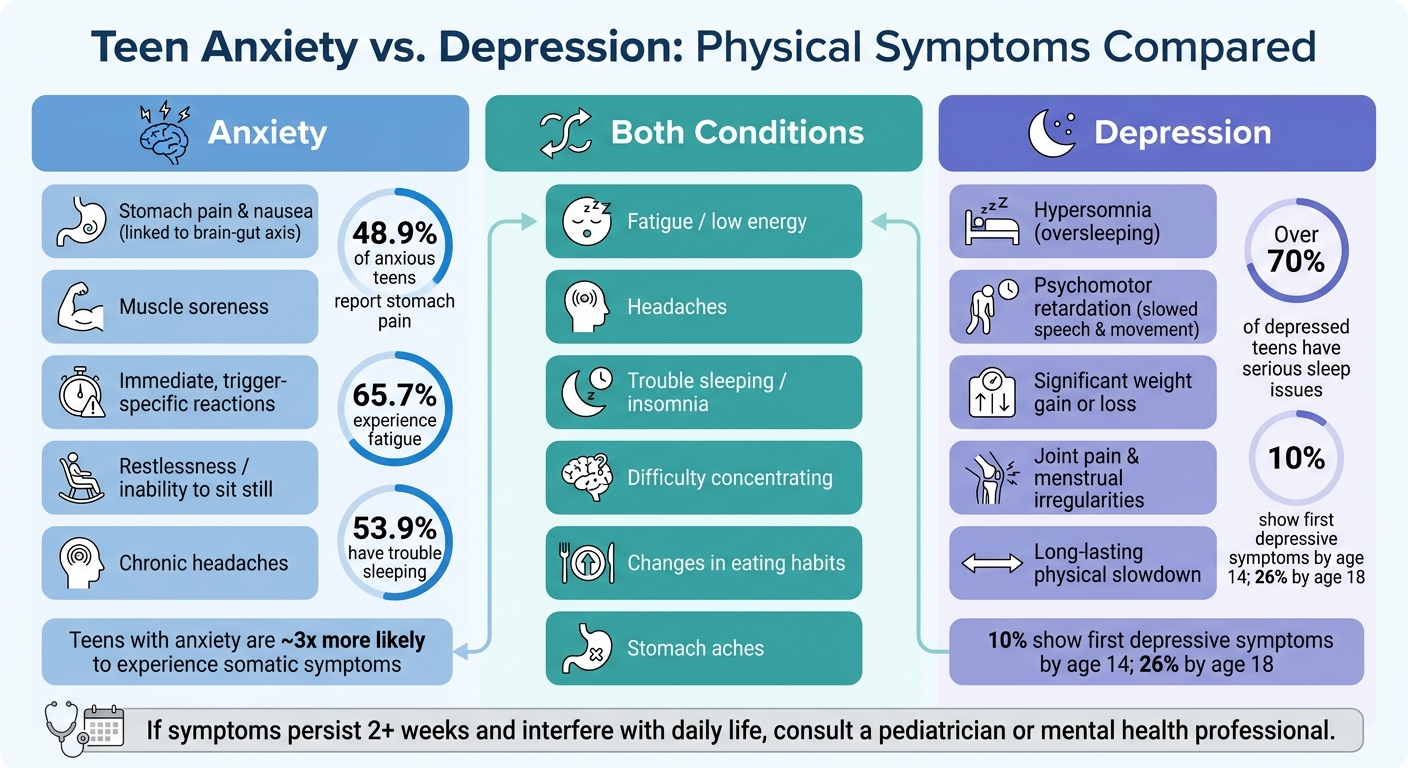
Teen Anxiety vs. Depression: Physical Symptoms Compared
How Depression Affects the Body
Depression doesn't just affect the mind - it leaves a mark on the body too. It disrupts key systems, like the HPA axis, and interferes with serotonin and glutamate pathways. These changes alter how the body processes pain and energy, making everyday life feel harder.
One of the most noticeable physical effects is on sleep. Over 70% of teens with depression struggle with serious sleep issues, such as insomnia or delayed sleep phase syndrome. And the connection goes both ways: poor sleep can worsen depression, while depression itself makes restful sleep harder to achieve.
"Disrupted sleep not only co-occurs with depressive symptoms but also contributes to their onset, severity, and recurrence, indicating a bidirectional relationship between sleep and mood dysregulation during adolescence." - BMC Psychiatry
Key Physical Symptoms of Depression
In teenagers, depression often shows up as irritability rather than just sadness. Physically, there are specific signs that parents and caregivers should be aware of:
- Constant fatigue – even small tasks can feel overwhelming.
- Sleep disturbances – ranging from insomnia to excessive sleeping (hypersomnia).
- Appetite and weight changes – noticeable shifts in eating habits, either eating much more or much less.
- Unexplained physical pain – recurring headaches, stomach problems, joint pain, or irregular menstrual cycles.
- Changes in movement – either slowed speech and actions (psychomotor retardation) or unusual restlessness and agitation.
"Depression can cause physical symptoms. So, take notice if your kid is having problems like: Headaches, joint or body pain, stomach issues, menstrual irregularities." - Susan Albers, PsyD, Cleveland Clinic
It’s also important to know that 10% of people show their first depressive symptoms by age 14, and this number jumps to 26% by age 18. Recognizing these signs early can make a big difference.
Where Depression and Anxiety Symptoms Overlap
Some physical symptoms are shared between depression and anxiety, which can make it tricky to distinguish between the two. Fatigue, headaches, trouble sleeping, and difficulty focusing are common in both conditions. When both occur together - a frequent scenario - the symptoms can become even harder to untangle.
Here’s a breakdown of symptoms unique to depression versus those shared with anxiety:
| Symptom Category | Depression-Specific Signs | Shared with Anxiety |
|---|---|---|
| Movement | Psychomotor retardation (slowed speech/movement) | Restlessness or inability to sit still |
| Pain | Joint pain, menstrual irregularities | Chronic headaches, stomach aches |
| Energy/Sleep | Hypersomnia (oversleeping) | Persistent fatigue, insomnia |
| Appetite | Significant weight gain or loss | Changes in eating habits |
| Cognition | Delays in thinking | Difficulty concentrating |
The difference often lies in the pattern and persistence of symptoms. Depression tends to bring more long-lasting physical slowdown and appetite shifts, while anxiety is often tied to specific triggers and more immediate physical reactions. If your teen’s symptoms last for weeks, affect multiple areas of their life, and don’t have a clear medical cause, it’s time to take a closer look.
Emotional Causes vs. Medical Conditions: How to Tell the Difference
When teens experience persistent issues like stomachaches, headaches, or fatigue, it can be tricky to determine if the cause is emotional distress or a physical health issue.
Patterns That May Point to Anxiety or Depression
The focus shouldn't be on just one symptom but on the overall pattern. Anxiety and depression often show up as ongoing, widespread symptoms that don’t match the level of daily stressors. For example, if a teen’s symptoms last for weeks, have no clear cause, and are paired with a loss of interest in activities they used to enjoy, it could indicate depression. Spotting these patterns is a key step in deciding when to seek professional help.
"If it starts becoming persistent and reaching across all areas of your life, then that might be a signal that you're dealing with something bigger." - Karen Jacobs, DO, Psychiatrist, Cleveland Clinic
Physical Red Flags That Need Medical Attention
While patterns can point to emotional distress, certain physical symptoms require immediate medical evaluation. If your teen experiences any of the following, it’s important to consult a doctor promptly:
- Significant, unexplained weight changes
- Severe or worsening headaches
- Menstrual irregularities
- Noticeable behavioral changes, such as increased aggression, self-harm, or mentions of suicide
The American Academy of Pediatrics (AAP) advises that all children aged 12 and older be screened for depression during their routine checkups.
"It's important to make sure that there isn't an underlying health issue fueling those changes." - Dr. Veronica Issac, Pediatrician
What Parents and Caregivers Should Do
Understanding these patterns and physical warning signs can help differentiate between emotional struggles and medical conditions. Start by consulting your teen’s pediatrician to rule out health issues like thyroid problems or anemia, which can mimic symptoms of anxiety or depression. If no medical cause is found and the symptoms have lasted two weeks or more, seeking help from a mental health provider is the next step.
Keeping a symptom log can make this process easier. Document details like the type of symptom, how long it lasts, and any noticeable triggers. This information will be helpful for both medical and mental health professionals. For additional support, BestLife Counseling offers individual therapy and psychiatric evaluations through their Advanced Practice Nurse (APN) services. They can help determine whether emotional factors like anxiety or depression are behind your teen’s physical symptoms.
"Depression is treatable, and no parent has to face it alone. With support, care, and open conversations, teens can recover and thrive." - Dr. Susan Albers, Psychologist
How Parents and Caregivers Can Help
Parents have a key role in addressing teen anxiety and depression. By managing symptoms at home and connecting with professionals, they can make a meaningful difference.
Tracking Symptoms and Triggers
Keeping a symptom log can be incredibly helpful. Document your teen's physical symptoms, how long they last, and what might have triggered them - such as a test, a disagreement with friends, or poor sleep. Over time, patterns often emerge. Common triggers include academic stress, peer issues, bullying, or major life events like a family separation or loss. These records not only help you understand your teen’s struggles but also provide valuable insights for professionals to create a tailored support plan.
Support Strategies to Use at Home
A consistent daily routine can work wonders. Set regular times for waking up, meals, and winding down. This structure can help stabilize your teen’s mood and energy levels, potentially easing symptoms like fatigue or appetite changes.
When talking with your teen, keep the pressure low. Start with something simple and open-ended, like, "I've noticed you seem a bit off lately - I'm here if you want to talk." This approach opens the door for conversation without making your teen feel overwhelmed. Dr. Carla Marie Manly, a private practitioner and author, emphasizes the importance of simply being there:
"Listen and be present! Anxiety and depression can be reduced when parents listen nonjudgmentally and make emotional space for their children to talk, vent, or 'just be.'"
Encourage small steps, like going for a short walk, to help ease withdrawal. Acknowledge their efforts with affirmations like, "I’m proud of you for getting outside even though you felt tired." These small moments of encouragement can reinforce positive actions.
If symptoms last more than two months, it’s time to seek professional help.
Local and Clinical Resources
Start by consulting your teen’s pediatrician to rule out medical issues. They can also provide referrals to school counselors or mental health specialists. If your teen struggles to open up to you, encourage them to speak with another trusted adult, like a school counselor or family member.
For specialized care, BestLife Counseling offers a range of services, including individual therapy, psychiatric evaluations, and medication management through Advanced Practice Nurse (APN) services. They even provide in-home therapy for teens who have difficulty attending office visits. BestLife Counseling has locations in Cape May Court House and Rio Grande, NJ.
"Everyone can benefit from mental health services because they provide a safe and supportive space to address and manage various mental health concerns and improve overall well-being." - BestLife Counseling
If your teen mentions self-harm or suicide, act immediately. Contact the 988 Suicide & Crisis Lifeline by calling or texting 988, or take them to the nearest emergency room.
Combining home-based strategies with professional care creates a strong foundation for supporting your teen’s well-being.
Conclusion: Next Steps for Your Teen's Mental and Physical Health
Physical and mental health are deeply connected - conditions like anxiety and depression in teens often show up as physical symptoms, such as recurring headaches, stomach discomfort, joint pain, sleep disturbances, or changes in appetite.
The first step is to rule out any underlying medical conditions. Scheduling a visit with your teen's pediatrician is crucial before making any assumptions. Once medical causes are ruled out, it’s time to focus on mental health. Both anxiety and depression are treatable, and the American Academy of Pediatrics (AAP) advises routine depression screenings for all children starting at age 12 during their regular checkups. If symptoms persist for several weeks and interfere with daily activities, seeking a professional evaluation is essential. Afterward, local resources can help provide tailored support for your teen.
For families in New Jersey, BestLife Counseling offers a variety of services, including individual therapy, psychiatric evaluations, and medication management through Advanced Practice Nurse (APN) services. For teens who may struggle with attending in-office sessions, in-home therapy is also available. With locations in Cape May Court House and Rio Grande, NJ, they provide accessible, personalized care to meet the unique needs of each teen.
FAQs
How can I tell if my teen’s headaches or stomachaches are anxiety-related?
Frequent headaches or stomachaches without a clear medical explanation could be linked to anxiety, especially when paired with other signs like restlessness, muscle tension, difficulty sleeping, or avoiding social interactions. These issues tend to linger and might intensify during times of stress or when facing particular fears. If these patterns sound familiar, it might be time to explore professional support to help address your teen’s mental well-being.
What’s the quickest way to distinguish anxiety symptoms from depression symptoms?
Anxiety often shows up as constant worry, restlessness, and physical symptoms like tense muscles or a racing heartbeat. Depression, in contrast, tends to bring feelings of sadness, hopelessness, low energy, and a lack of interest in things that once felt enjoyable.
Quick tip: If a teenager feels wound up and uneasy, it’s likely anxiety. If they seem exhausted and uninterested, depression might be the cause. While these conditions can overlap, these signs can help tell them apart.
When should we see a pediatrician versus a mental health professional?
When addressing concerns about a child's well-being, it's important to begin with a visit to a pediatrician. They can perform an initial screening to rule out any physical health issues that might be contributing to the problem. If necessary, they may recommend a referral to a mental health specialist. For conditions like anxiety or depression, a mental health professional is equipped to provide a more detailed evaluation and appropriate treatment options.