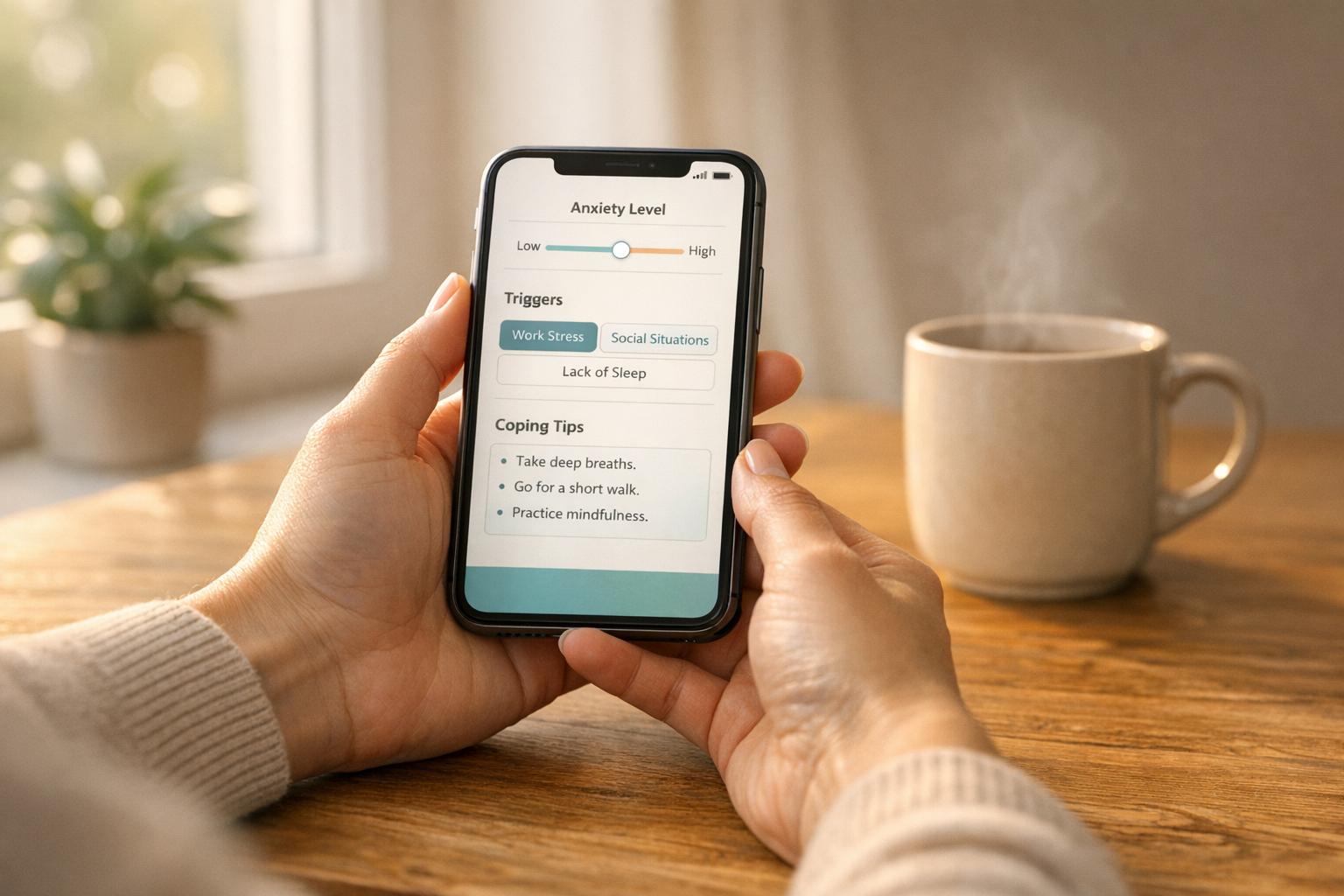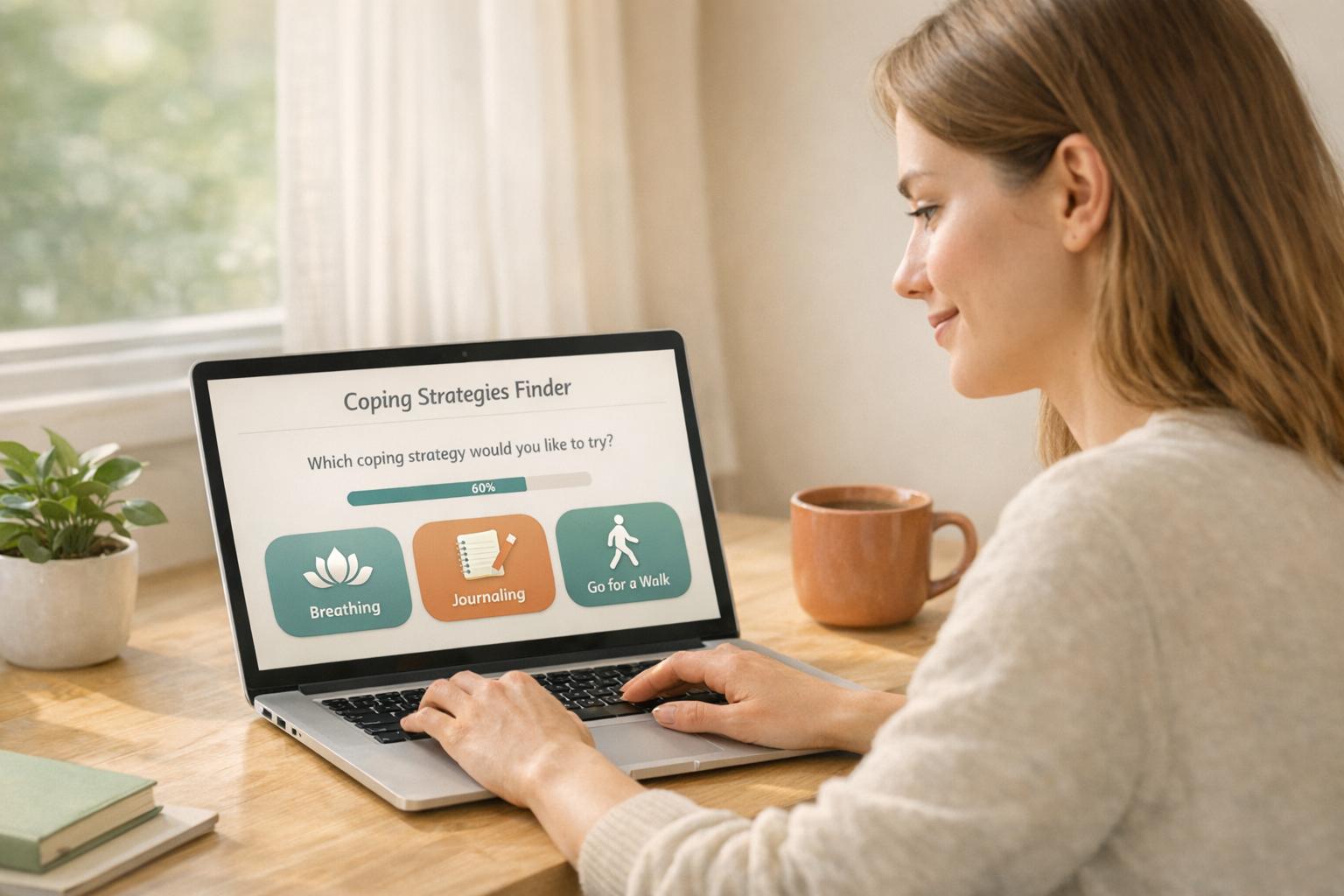
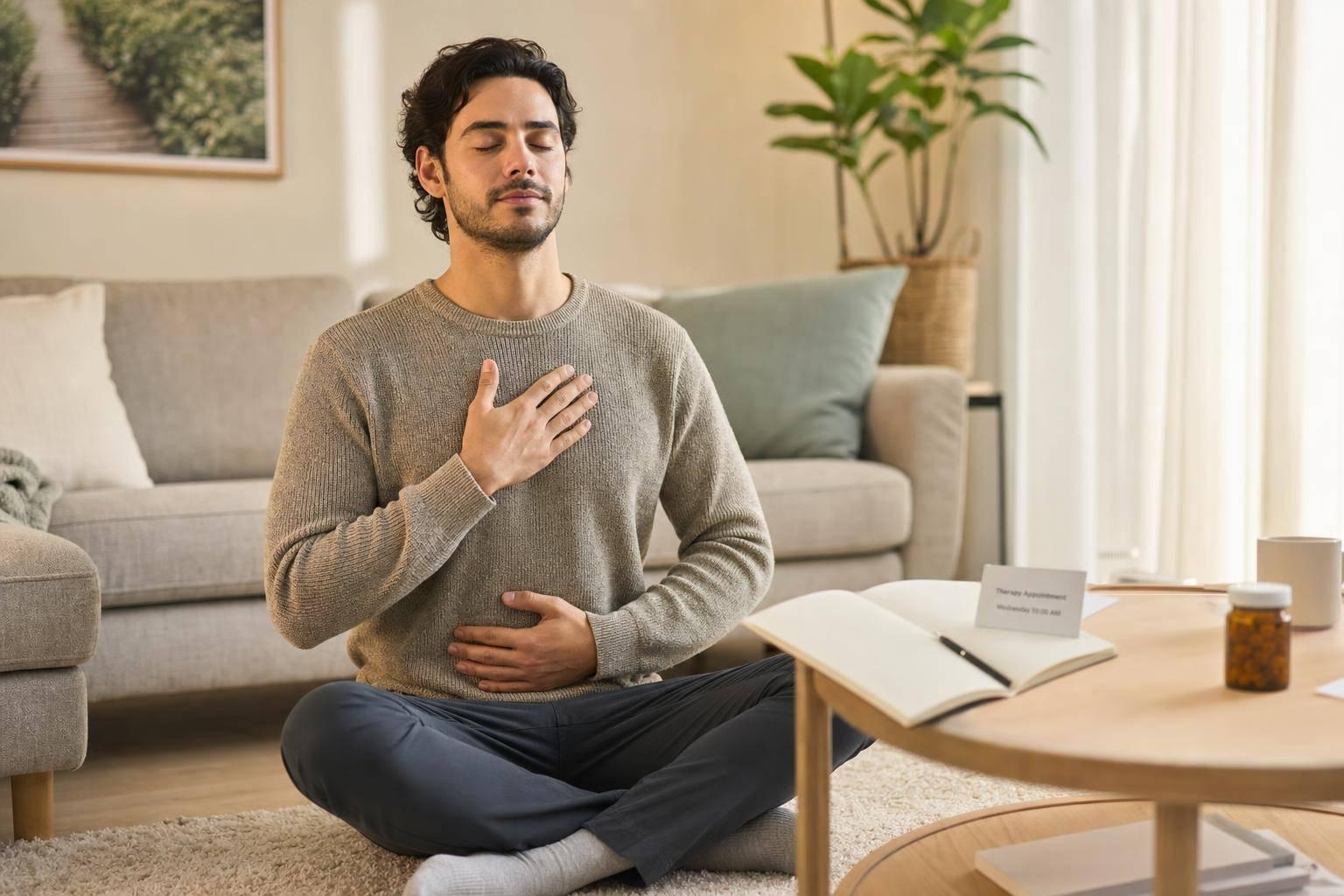
Mindfulness can help with anxiety and depression, but it is not a cure and it is not just “trying to relax.” I’d sum it up this way: notice what is happening, return to the present moment, and use more support when symptoms start affecting daily life.
Here’s the short version:
- Mindfulness means paying attention on purpose to thoughts, feelings, and body sensations without judging them.
- It can help with worry, racing thoughts, rumination, self-blame, and tension.
- A simple tool like the 5-4-3-2-1 grounding exercise can help bring attention back to the present.
- 2 to 5 minutes a day is a good starting point for most beginners.
- It often works best with counseling, and for stronger symptoms, APN psychiatric care and medication support may be added.
- If symptoms affect work, school, sleep, or relationships, self-help alone may not be enough.
- Any suicidal thoughts or safety concerns need immediate professional help.
A few facts matter here. Anxiety disorders affect about 19% of U.S. adults each year, and major depression affects about 8% of U.S. adults in a given year. That helps explain why short, repeatable coping skills matter. But it also shows why mindfulness should be used in the right level of care.
| Option | Best fit | Main idea | Limit |
|---|---|---|---|
| Mindfulness on your own | Mild stress or early symptoms | Short daily practice | Can be hard to keep up alone |
| Mindfulness + counseling | Moderate anxiety or depression | Adds structure and therapy skills | Takes time and appointments |
| Mindfulness + counseling + APN support | Strong, lasting, or disruptive symptoms | Adds evaluation and medication care | Needs close follow-up |
Bottom line: if I were starting, I’d keep it simple: 2 minutes, once a day, then use grounding during stress. If symptoms keep building or start taking over daily life, I’d add professional care instead of trying to push through alone.
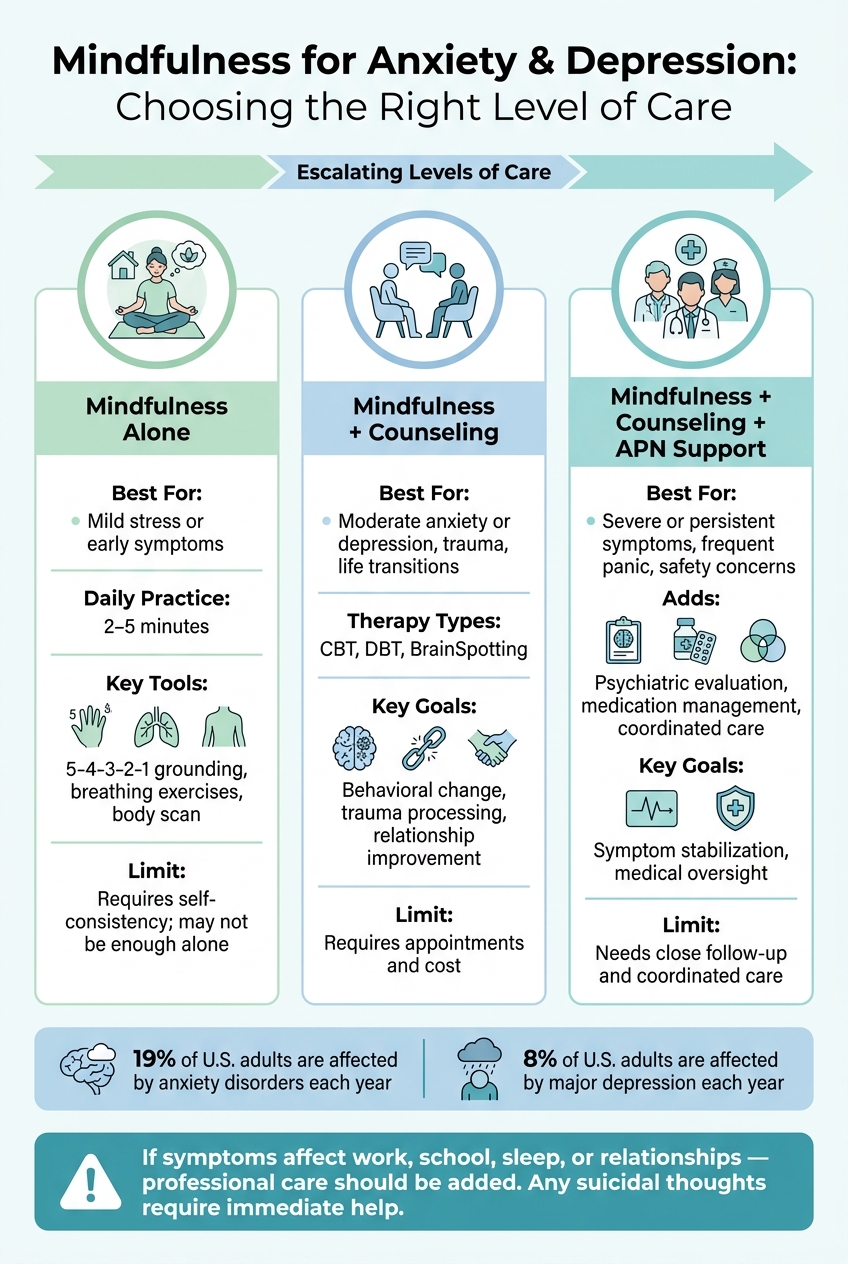
Mindfulness for Anxiety & Depression: Choosing the Right Level of Care
Meditation for Depression, Anxiety & Stress (Guided Relaxation)
How Mindfulness Helps Manage Anxiety and Depression
Mindfulness can help interrupt worry loops, racing thoughts, rumination, and self-criticism before they start running the show. From there, the main job is simple: match the level of care to how severe the symptoms are.
How Mindfulness Supports Anxiety: Slowing Worry and Physical Tension
When anxiety starts building, grounding techniques can pull your attention back to the present and help calm both racing thoughts and physical tension. One simple option is the 5-4-3-2-1 grounding exercise, which can help.
That same present-moment focus can also help when low mood shows up through rumination or self-blame.
How Mindfulness Supports Depression: Reducing Rumination and Self-Criticism
With depression, mindfulness may help reduce rumination, self-criticism, and emotional overload. Sensory grounding can be useful when mood feels heavy and hard to shake.
Common Mindfulness Care Formats Compared
The best format depends on symptom severity, personal preference, and how much structure someone wants. Here are a few common options:
| Care Format | Symptom Fit | Structure | Benefits | Limits |
|---|---|---|---|---|
| Self-Guided Practice (books, handouts) | Mild stress or early symptoms | Low | Flexible, low cost | Requires consistency |
| Clinician-Led Therapy (CBT/DBT) | Mild to moderate anxiety or depression | High | Evidence-based, skills-focused | Requires appointments and cost |
| Counseling + APN Support | Stronger symptoms or medication questions | High | Adds psychiatric evaluation and medication management | Requires coordinated care |
When symptoms feel stronger or last longer, mindfulness tends to work best alongside counseling or APN care.
What Beginners Can Expect When Starting Mindfulness
Mindfulness doesn't always feel calm or easy at the start. In your first few sessions, your mind may wander. You may feel restless, distracted, or even a little uncomfortable. That's normal. You're learning a new skill, not trying to have a perfect meditation session.
Early on, consistency matters more than perfection.
Simple Beginner Practices That Fit Daily Life
One easy way to begin is the 5-4-3-2-1 grounding method. When stress starts building, pause and name:
- 5 things you see
- 4 things you can touch
- 3 things you can hear
- 2 things you can smell
- 1 thing you can taste
This can help bring your attention back to the present.
| Practice Length | Recommended Exercise | Typical Early Obstacles | What to Expect |
|---|---|---|---|
| 2 minutes | 5-4-3-2-1 grounding | Forgetting to use it when stress rises | May help you return to the present |
A Realistic Timeline for Noticing Changes
Some people feel a small shift after one session. But steady change usually takes several weeks of regular practice.
At first, attention drifts a lot. That's part of it. Over the next few weeks, coming back to the present often starts to feel easier. With steady practice, these techniques can become faster to use when worry, rumination, or self-criticism starts to build.
If mindfulness still feels overwhelming, or your symptoms continue to disrupt daily life, counseling or APN support should be added.
How Practice Feels as It Builds
Start with 2 minutes. When that feels like a normal part of your day, move to 5 minutes. Add more time only if you can keep showing up on a regular basis.
When to Add Counseling or APN Support to Mindfulness Practice
Mindfulness can help with mild stress. But once anxiety or depression starts spilling into work, school, relationships, or day-to-day life, it makes sense to bring in professional care. At that point, mindfulness usually works best as one part of a bigger treatment plan.
Signs That Professional Care Should Be Added
Some situations need more than a daily mindfulness routine. If you notice a low mood that sticks around, frequent panic symptoms, avoiding school or work, or symptoms getting worse even with steady self-help, it's time to reach out for help.
Any suicidal thoughts or safety concerns require immediate professional attention.
From there, counseling and APN care can add structure, evaluation, and symptom management.
How Counseling and APN Medication Management Work with Mindfulness
Therapists often combine mindfulness with CBT, DBT, or BrainSpotting in trauma-focused care. BrainSpotting may be used in trauma-focused treatment.
When symptoms are more severe, an Advanced Practice Nurse (APN) can provide a psychiatric evaluation and medication management alongside therapy. Coordinated treatment planning helps keep behavioral and medical care in sync.
The right mix of support depends on symptom severity and how much those symptoms affect daily life.
Choosing the Right Level of Support
| Level of Support | Symptom Severity | Typical Goals | Care Setting |
|---|---|---|---|
| Mindfulness Alone | Mild stress or low mood | Stress reduction, present-moment awareness | Home or daily routine |
| Mindfulness + Counseling | Moderate anxiety or depression, trauma, or life transitions | Behavioral change, processing trauma, improving relationships | Outpatient offices or in-home care |
| Mindfulness + Counseling + APN Support | Severe or persistent symptoms, frequent panic symptoms, or safety concerns | Symptom stabilization, psychiatric evaluation, medication management | Clinical outpatient setting with coordinated care planning |
Building a Simple Mindfulness Routine: Key Takeaways
Once a short practice starts to feel doable, turn it into part of your day. Mindfulness tends to work best when you do it daily for a few minutes at a time. In plain terms: short sessions done often usually help more than long sessions you do once in a while.
A Simple Daily Routine for Home, School, and Work
Use brief anchors at the same points in your day so the routine feels easy to repeat.
- Morning: After waking up, spend 2 to 5 minutes doing slow breathing.
- During stressful moments: When stress starts to build, pause, breathe slowly, and use the 5-4-3-2-1 grounding technique.
- Evening: Before bed, try a short body scan to help ease tension.
If symptoms stick around or start getting in the way of daily life, mindfulness may work better alongside counseling or APN medication support. BestLife Counseling offers in-home and outpatient therapy, along with APN psychiatric evaluations and medication management.
FAQs
How is mindfulness different from relaxation?
Mindfulness is the practice of noticing your thoughts, emotions, and physical sensations as they happen, then gently bringing your attention back to the present moment.
Relaxation is mostly about easing tension and calming the body and mind. Mindfulness can help with that, but its main aim is awareness of what’s happening right now, not just stress relief.
What if mindfulness makes me more anxious at first?
This can happen at first. Mindfulness can make you notice anxious thoughts, physical sensations, or emotions more clearly for a while. That doesn’t mean it’s a bad fit for you.
The aim is simple: notice what’s happening without judging it, then gently bring your attention back to your breathing or a short body scan. If your anxiety spikes or your symptoms get worse, pause and get in-person help from a therapist and, if needed, APN medication support through BestLife Counseling.
How do I know when I need counseling or APN support?
Consider counseling or APN support if anxiety or depression lasts more than two weeks or starts to affect your work, relationships, or daily routine.
If you have repeated thoughts of self-harm or suicide, seek emergency care right away. BestLife Counseling offers in-person therapy, psychiatric evaluations, and medication management.