
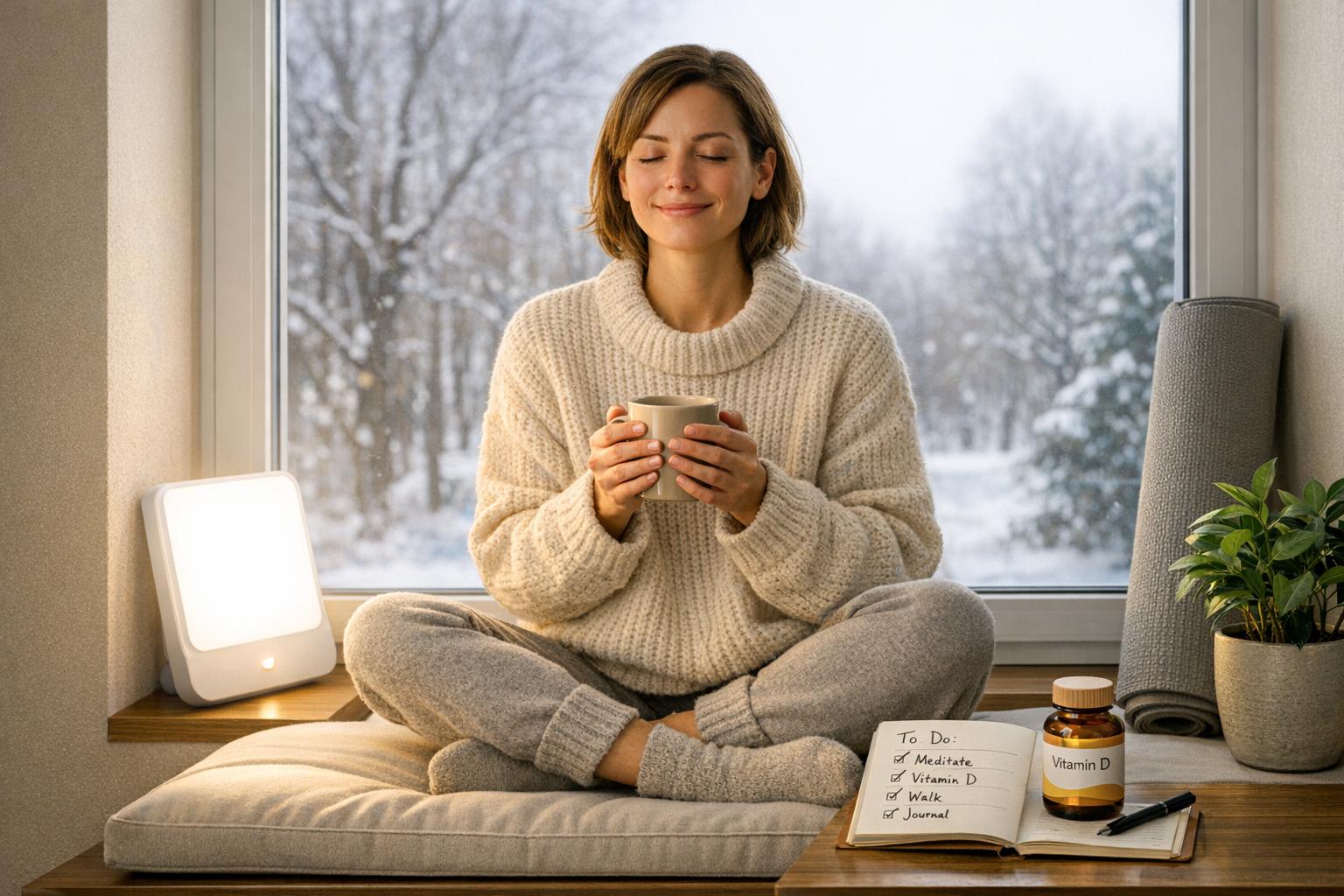
When winter hits, shorter days and colder weather can leave you feeling low and sluggish. These tips can help you beat the "winter blues" and stay balanced:
- Stay Active: Exercise boosts mood by releasing endorphins. Even 20 minutes of walking, yoga, or dancing can help.
- Get Sunlight: Exposure to natural light increases serotonin levels. Spend time outdoors or sit near windows when possible.
- Try Light Therapy: Light therapy boxes mimic sunlight and can reduce winter fatigue. Use them in the morning for 20–30 minutes.
- Practice Mindfulness: Meditation and breathing exercises reduce stress and improve focus. Apps like Headspace can guide you.
- Boost Vitamin D: Low Vitamin D can worsen mood. Include foods like salmon or fortified milk, or consider supplements after consulting a doctor.
- Stay Connected: Social interaction combats loneliness. Schedule regular meetups, join groups, or host small gatherings.
- Stick to a Routine: Consistent sleep-wake cycles and daily habits help stabilize mood and energy levels.
- Seek Help When Needed: If symptoms persist, consult a mental health professional for tailored support.
These strategies can help you feel more energized and maintain a positive outlook during the darker months. If symptoms last more than two weeks, it's important to seek professional help.
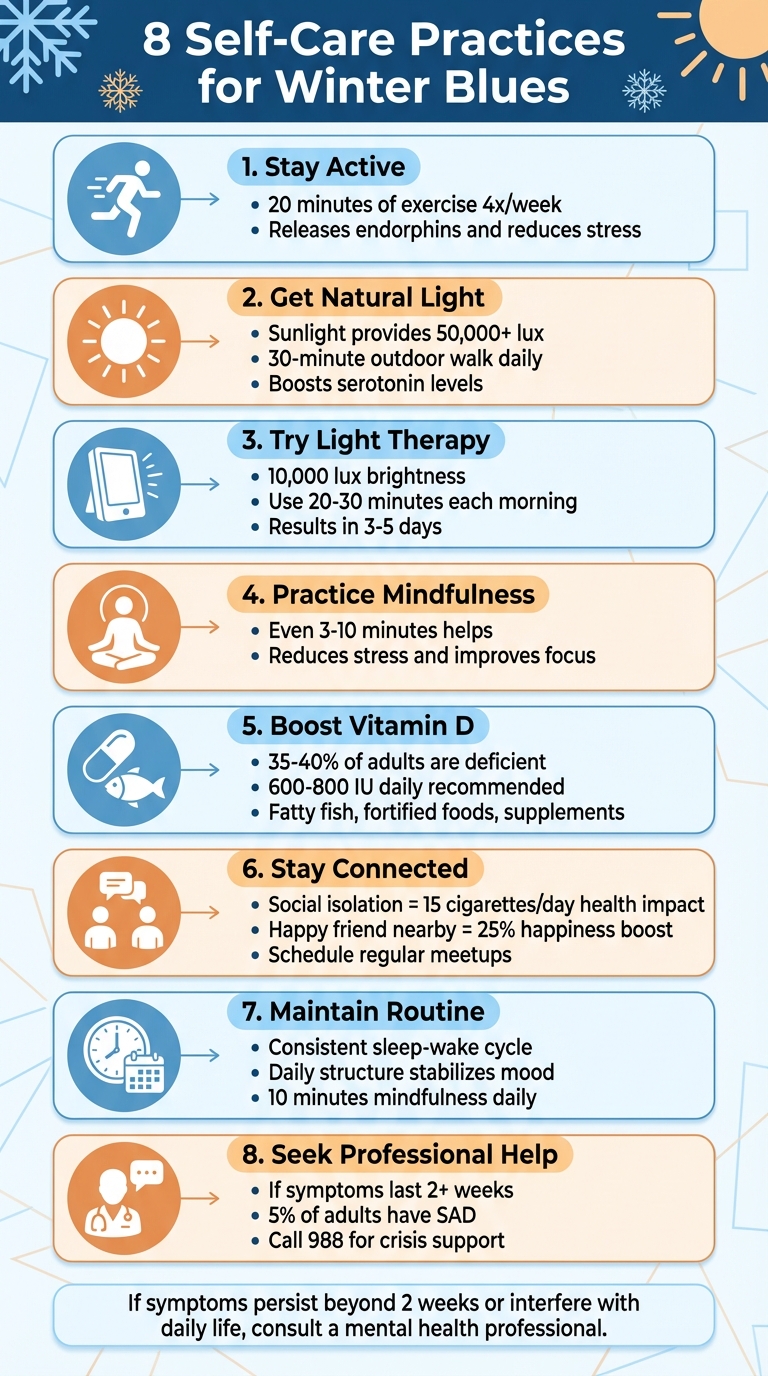
8 Self-Care Practices to Combat Winter Blues
10 SELF CARE TIPS for Mental Health | Self Care Habits for the Winter Blues
1. Movement and Physical Activity
Getting active is one of the best ways to combat winter blues. Exercise triggers the release of endorphins - those feel-good chemicals that naturally lift your mood. It also helps lower cortisol, the hormone responsible for stress. Lisa M. Shulman, MD, Professor of Neurology at the University of Maryland Medical Center, sums it up perfectly:
"Exercise can help overcome feelings of depression."
The great news? You don’t need a gym membership or fancy equipment to get started. A review of over 1,000 studies found that activities like walking, resistance training, Pilates, and yoga can significantly ease anxiety and mild depression. Even just 20 minutes of vigorous exercise four times a week can make a noticeable difference in your mood. No treadmill? No problem. Try walking up and down stairs, following free no-equipment workouts on YouTube, or even mall walking - many shopping centers open early for walkers, offering a safe and comfortable environment [13, 16].
When heading outdoors isn’t an option, indoor activities can be just as effective. Yoga and stretching exercises, like the cat-cow pose or 90/90 hip rotations, are great for relieving tension and reducing stress. Dance workouts, such as Zumba, combine cardio benefits with a mood boost - no equipment needed. You can even use commercial breaks during your favorite TV shows to squeeze in quick sets of pushups, squats, or sit-ups. And don’t underestimate household chores like vacuuming or sweeping - these activities raise your heart rate and improve circulation too.
The key to reaping the benefits of movement is consistency, not intensity. Start small, with just 10 minutes a day, and build from there. Dr. Darshan Mehta, Medical Director at the Benson-Henry Institute for Mind Body Medicine, emphasizes:
"The point is to get moving, and move often."
To stay motivated, consider finding an accountability partner - text a friend about your workouts or join live classes. These small steps can help you stick to your routine [6, 17]. Regular physical activity doesn’t just clear your mind and boost energy; it also supports your lymphatic system and helps shake off the sluggishness that often comes with shorter winter days. Incorporating movement into your daily life is a simple yet powerful way to stay well this season [13, 16].
2. Natural Light Exposure
Sunlight plays a key role in your brain's chemistry. When natural light enters your eyes, it activates the hypothalamus - a part of your brain responsible for regulating your internal sleep-wake cycle (also known as your circadian rhythm). This activation triggers the release of serotonin, often called the "feel-good" chemical, which helps manage your mood, appetite, and sleep. Without enough exposure to sunlight, your brain produces less serotonin and more melatonin, which can leave you feeling sluggish and down. This is why natural sunlight outshines artificial light in its benefits.
Incorporating natural light into your daily routine is easier than you might think. On a bright day, sunlight provides over 50,000 lux, compared to just 10,000 lux from light therapy boxes. Dr. Mark Frye, a psychiatrist at Mayo Clinic, emphasizes:
"There is no substitute for natural light. If you work during the day, try to go for a walk during a break or lunch."
Even a short time outdoors can make a difference. Dr. Stephen Jumper, a family medicine physician at Dartmouth Health, highlights that a 30-minute walk in daylight can have a surprising impact. Stepping outside within two hours of waking helps reset your internal clock. If you work indoors, take advantage of your lunch break to get outside when the sun is at its highest - even on overcast days, outdoor light is far brighter than what you get indoors [22, 26]. When going outside isn’t an option, there are still ways to maximize your exposure to natural light.
To make the most of daylight indoors, position your workspace or favorite chair near a window, and keep curtains or blinds fully open during the day [22, 26]. If trees or other obstructions block your windows, consider trimming branches to let more light in. Keep in mind, though, that sunlight filtered through glass requires hours of exposure to match just a few minutes of direct outdoor sunlight. Whenever possible, prioritize stepping outside for the greatest benefit.
For many, the darker months can take a toll. Around 40% of Americans report feeling a dip in their mood during winter, and about 5% of the population experiences Seasonal Affective Disorder (SAD) [1, 22, 24]. Simple adjustments to increase your exposure to natural light - whether by stepping outdoors or enhancing indoor light - can help maintain serotonin levels and keep your mood steady throughout the year.
3. Light Therapy and Dawn Simulation
When natural sunlight becomes scarce during darker months, alternative therapies can help fill the gap. Light therapy devices are a popular option for mimicking the effects of sunlight. As Dr. Adam Borland from Cleveland Clinic explains:
"What light therapy does is compensate for the lack of exposure that we get from natural sunlight."
Light therapy boxes emit about 10,000 lux of brightness - roughly 20 times stronger than typical indoor lighting. This intensity can help increase serotonin levels while reducing excess melatonin, which often contributes to sluggishness and fatigue. To get the most out of a light therapy box, sit 16 to 24 inches away for 20–30 minutes each morning, preferably within the first hour of waking. You don’t need to stare directly at the light; instead, use the time to read, eat, or work while keeping your eyes open.
For a softer approach, dawn simulators gradually brighten your room over 30 minutes before your wake-up time, mimicking a sunrise with about 250 lux of light. This gentle transition can help regulate your circadian rhythm and is less likely to cause eyestrain compared to light therapy boxes.
When selecting a device, look for one specifically designed for Seasonal Affective Disorder (SAD) that filters out nearly all UV light to protect your eyes and skin. Prices typically range from $25 to $100, but keep in mind that insurance may only cover the cost if you have a formal SAD diagnosis. If you have conditions that make you sensitive to light, consult your doctor before starting therapy.
Most people notice positive effects within three to five days, though it can take up to two weeks to feel the full benefits. For consistent results, use the device daily throughout the fall and winter months, continuing until spring brings back natural sunlight.
4. Mindfulness and Meditation
When winter brings shorter days and sluggish energy, mindfulness and meditation offer a straightforward way to handle stress - no fancy tools required. These practices encourage you to confront challenging emotions rather than suppress them. As mindfulness teacher Sylvia Boorstein wisely notes:
"Perhaps these days of less sunlight are opportunities for more contemplative time, more looking deeply to see what can only be seen in the dark".
Starting a meditation routine doesn’t have to be complicated. Even a few minutes can make a difference. For instance, a quick three-minute check-in or a short body scan can help release tension. The idea is simple: sit quietly, observe your thoughts and physical sensations, and avoid judging what comes up. A morning meditation can also help set a peaceful tone for the day while supporting your sleep-wake cycle.
Loving-Kindness meditation is another excellent option, especially during the isolating winter months. This 10-to-15-minute practice involves cultivating feelings of warmth and goodwill toward yourself and others, helping to combat loneliness. Another helpful method is the "Notice, Shift, Rewire" technique: when a negative thought pops up, notice it, redirect your focus to gratitude, and hold onto that positive feeling for 15–30 seconds.
If you prefer structured guidance, apps like Headspace offer over 500 guided meditations on topics like stress, resilience, and compassion. They even include "Move with Mindfulness" sessions that blend gentle movement with meditation - perfect for staying active when it’s too chilly to head outdoors. For budget-friendly options, Insight Timer provides access to more than 80,000 free meditations, while Smiling Mind and UCLA Mindful are completely free with no hidden costs.
Tracking your mood can help identify which meditation techniques work best for easing your winter stressors. Even brief daily sessions can make a noticeable impact on managing seasonal challenges and lifting your mood.
5. Vitamin D and Nutritional Support
Beyond movement, light exposure, and mindfulness, what you eat plays a huge role in managing winter blues. During the colder months, reduced sunlight means your body produces less Vitamin D - a key nutrient for mood regulation. According to the National Institute of Mental Health, "Vitamin D deficiency may exacerbate these problems in people with winter-pattern SAD because vitamin D is believed to promote serotonin activity".
This deficiency isn’t rare. About 35–40% of U.S. adults lack sufficient Vitamin D, and this is linked to a higher risk of depression. While studies on Vitamin D supplements show mixed results, combining dietary sources with professional advice is a practical way to address this. For most adults, the recommended daily intake is 600–800 IU, though individual needs can vary.
Start by scheduling a blood test. This will reveal your Vitamin D levels and help determine if supplementation is necessary. It's an important step because Vitamin D can interact with common medications like cholesterol drugs (atorvastatin, lovastatin), blood pressure medications (verapamil, diltiazem), and diuretics. Also, taking more than 4,000 IU daily without medical supervision can be harmful, leading to nausea, muscle weakness, or even kidney stones.
A food-first approach is often the best starting point. Fatty fish like rainbow trout (645 IU per 3-ounce serving) and sockeye salmon (570 IU per 3-ounce serving) are excellent sources. Cod liver oil is another option, with just one tablespoon providing a whopping 1,360 IU (227% of the daily requirement). Fortified foods, such as milk, orange juice, and cereals, can also help, but check labels since fortification levels differ by brand. Dietitian Serena Ball suggests adopting an "anti-SAD" eating pattern as early as September to build up nutrient reserves before winter arrives. Combined with physical activity and light exposure, maintaining adequate Vitamin D levels can help regulate your mood throughout the season.
If you decide to use supplements, choose products with USP or NSF certifications to ensure quality. Since Vitamin D is fat-soluble, take it with a meal that includes healthy fats to improve absorption. And if you notice symptoms like confusion, extreme thirst, or an upset stomach, contact your doctor right away.
6. Social Connection and Support
Winter’s chilly days and shorter daylight hours can do more than just dampen your mood - they can also make you feel less inclined to connect with others. Dr. Randall Espinoza, Medical Director of the Garvey Institute Center for Neuromodulation at UW Medicine, explains that physical warmth triggers the production of oxytocin, a hormone tied to trust and bonding. When you’re bundled up inside, that natural push to connect can take a backseat. But staying socially engaged is one of the simplest and most effective ways to combat those winter blues.
The impact of isolation on health is no small matter. Research shows that extended periods of loneliness can harm your health as much as smoking 15 cigarettes a day. Even more striking, having minimal social interaction is twice as damaging to your lifespan as obesity. These comparisons highlight the importance of maintaining social ties, not just for emotional well-being but for your overall health.
To weave social connection into your life without adding stress, consider small, manageable steps. For instance, invite a friend to join you on everyday errands like grocery shopping, walking the dog, or hitting the gym. These shared activities don’t feel like extra work but instead blend naturally into your routine. Plus, studies show that if a happy friend lives within a mile of you, your own happiness can increase by 25%.
Feeling low on energy? Try "body doubling", where you tackle tasks side-by-side with someone, either in person or virtually. Whether it’s folding laundry while chatting or working on separate projects in a coffee shop, this approach makes even mundane chores more enjoyable. Dr. Espinoza also highlights the value of virtual meetups:
"Meeting online consistently is key. People can plan around and look forward to these chats".
Setting a regular time for these hangouts each week can turn them into dependable moments of connection.
Another idea is to join local groups or events that provide structure and accountability. Book clubs, trivia nights, or volunteering at places like food banks or animal shelters are great options. These activities allow you to meet new people without having to plan everything yourself. If you’re reaching out to a friend who might be struggling, keep it low-pressure. For example, you could say:
"I’m going to a reading tonight; if you’re up for it, I’d love to see you, but if not, no worries".
Hosting small gatherings can also bring people together during the colder months. Rotating weekly dinner parties with friends is a fun way to stay connected. Whether you’re playing board games, doing crafts, or just sharing a meal, these cozy get-togethers create a sense of warmth and community - even when the weather outside feels anything but welcoming.
7. Daily Self-Care Routines
Building on exercise, light exposure, and social connection, having a steady daily routine can be a game-changer for winter self-care. Sticking to a routine not only helps stabilize your brain but also boosts overall well-being. Licensed psychologist Megan Johnson emphasizes:
"Set a routine and establish a regular sleep-wake cycle. Our brains really like patterns, so living life according to a routine helps the brain to thrive." – Megan Johnson, Licensed Psychologist
Start by setting consistent wake-up and bedtime hours, and make it a habit to open your blinds each morning to reset your circadian rhythm. This regularity can do wonders for your mood and energy levels. Even a simple to-do list with small, achievable tasks can provide a sense of accomplishment and structure.
Licensed therapist Katie Lear offers a grounded perspective:
"Self-care isn't all bubble baths and manicures: It's also taking practical steps every day to keep yourself healthy." – Katie Lear, Licensed Therapist
Incorporate sensory elements into your day, like soothing scents or calming sounds, to lift your spirits. Keep tools like journals, art supplies, or coloring books nearby to encourage moments of mindfulness throughout your day.
Engage in activities that encourage flow - those moments where you're so absorbed in something that time flies. Whether it's puzzles, crocheting, painting, or even video games, these activities can help reduce stress. Studies show that dedicating just 10 minutes a day to mindfulness can make a noticeable difference.
To improve sleep, establish screen-free time before bed. And don’t underestimate the power of clothing - wearing something that makes you feel energized can positively influence your mood.
8. Professional Mental Health Support
Sometimes, self-care just isn't enough. When feelings of sadness or other symptoms stick around for more than two weeks or start interfering with your job, relationships, or everyday routines, reaching out to a mental health professional becomes essential. This step isn't about replacing self-care but building on it with expert guidance.
If your symptoms are making daily life difficult, it’s worth consulting a therapist to figure out whether you're dealing with mild winter blues or something more serious, like clinical Seasonal Affective Disorder (SAD). SAD affects about 5% of adults in the U.S.. Dr. John Lauriello from Jefferson Health emphasizes that when these symptoms disrupt your ability to function, they could indicate depression. Treatments like Cognitive Behavioral Therapy (CBT) are often recommended because they help reshape negative thinking patterns and develop lasting coping strategies. In more severe cases, a psychiatric evaluation might be needed, which could include exploring medication options. Local resources, like BestLife Counseling, can help guide you through these treatments.
BestLife Counseling provides in-person therapy as well as support from advanced practice nurses (APNs) for psychiatric evaluations and medication management, addressing concerns like anxiety and depression. They even offer a free Mental Health Self-Check Tool to help you get a personalized assessment.
If you're having thoughts of self-harm or suicide, don't wait - call or text the Suicide and Crisis Lifeline at 988 right away. Taking the step to seek professional support is an important move toward feeling better.
Conclusion
Incorporating self-care into your daily routine can lay the groundwork for a healthier, more balanced winter. Winter doesn’t have to feel heavy or draining. By prioritizing your mental well-being, you can better navigate the seasonal changes - like shifts in serotonin and melatonin levels - that often contribute to irritability and low mood. Research confirms that self-care not only reduces stress but also enhances confidence and productivity.
Start small: maybe open your blinds to soak in the morning light or plan a weekly coffee date with a friend. As Rebecca Dolgin wisely points out, "In the same way you wouldn't ignore the oil light on your car, you shouldn't ignore the cues your body is sending you". These small, consistent steps - whether it’s exercising, trying light therapy, or simply maintaining a routine - can provide structure and a sense of control during the often-overwhelming winter months.
If feelings of sadness or fatigue last more than two weeks and begin to interfere with daily life, it’s important to seek professional help. Differentiating between mild winter blues and Seasonal Affective Disorder (SAD) - a condition that impacts about 5% of Americans - often requires expert insight. For in-person support, including psychiatric evaluations and medication management through APN services, visit BestLife Counseling.
FAQs
How can I tell if I have SAD or just winter blues?
Winter blues are brief periods of sadness or tiredness that usually improve with sunlight or as time passes. On the other hand, Seasonal Affective Disorder (SAD) is more intense, with symptoms like hopelessness, noticeable changes in sleep or appetite, and withdrawal from social activities lasting for at least two winters. If these symptoms disrupt your daily life, feel unmanageable, or persist, it’s important to reach out to a healthcare professional for proper evaluation and treatment options.
What should I look for in a safe light therapy box?
To get the most out of light therapy, opt for a light therapy box with at least 10,000 lux. Look for one with a large illuminated surface that emits minimal UV light while closely simulating natural sunlight. These qualities ensure both effectiveness and safety, especially during the darker, colder months.
Should I get my Vitamin D level tested before taking supplements?
It's always wise to talk to a healthcare professional before beginning vitamin D supplements. A quick blood test can determine your levels, particularly if you're at risk for deficiency. This way, you can tailor your approach to meet your needs in a safe and effective manner.