Mental health misconceptions still prevent many people from seeking care. Despite nearly 1 in 5 U.S. adults facing a mental health condition annually, myths like “mental health issues are rare” or “seeking help is a sign of weakness” persist. These beliefs worsen stigma, delay treatment, and limit recovery opportunities.
Here’s what you need to know:
- Mental health conditions affect 59.3 million Americans yearly.
- Half of all lifetime cases start by age 14.
- 70–90% see improvement with therapy and/or medication.
- People with mental health conditions are more likely to be victims, not perpetrators, of violence.
Understanding the facts can help normalize mental health conversations and encourage early intervention.
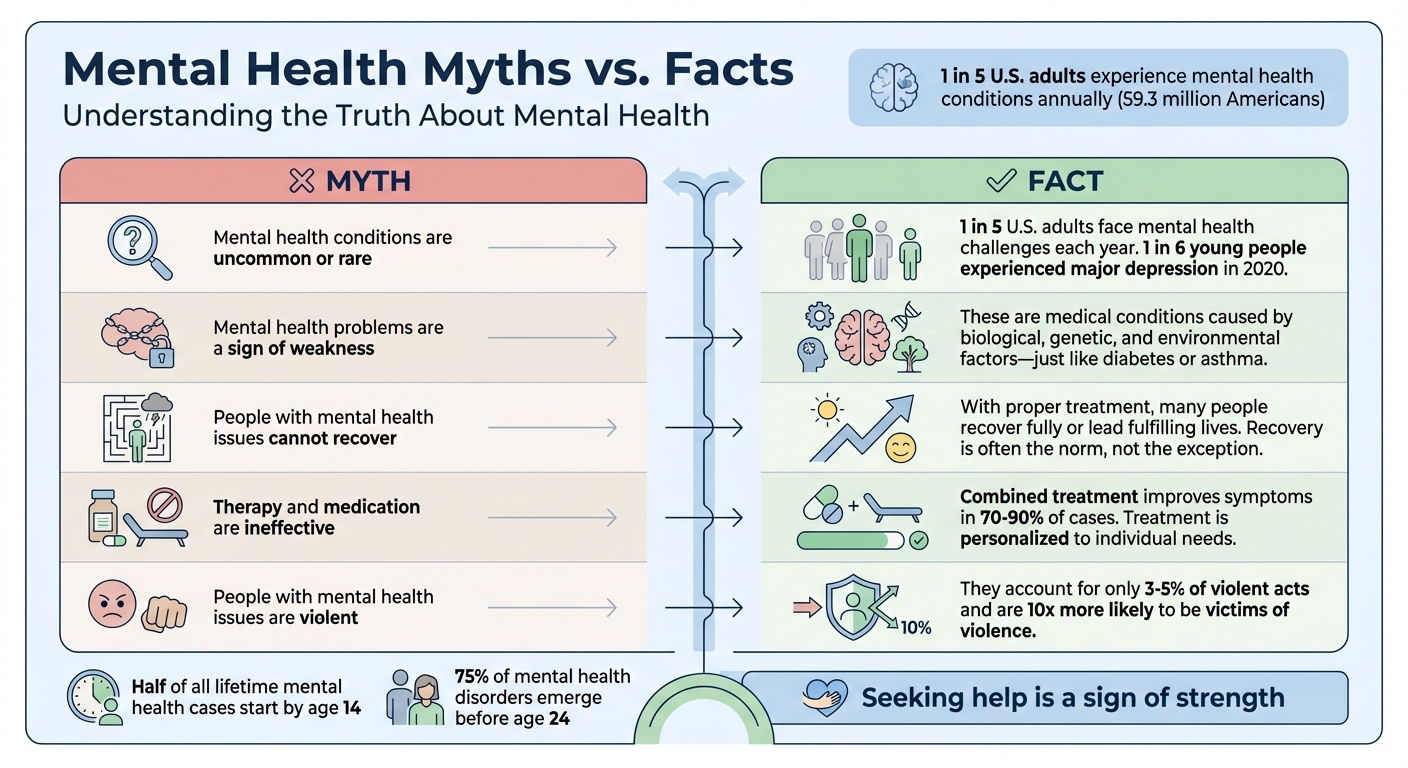
Mental Health Myths vs Facts: 5 Common Misconceptions Debunked
Psychologists Debunk 25 Mental-Health Myths
Mental Health Myths and Facts
Here are five common myths about mental health that persistently influence how society perceives these issues. By understanding the facts, we can challenge these misconceptions and foster a more supportive environment.
| Myth | Fact |
|---|---|
| Mental health conditions are uncommon or rare. | 1 in 5 U.S. adults face mental health challenges each year. |
| Mental health problems are a sign of weakness. | These are medical conditions caused by biological, genetic, and environmental factors. |
| People with mental health issues cannot recover. | With proper treatment, many people recover fully or lead fulfilling lives. |
| Therapy and medication are ineffective. | Combined treatment improves symptoms in 70%–90% of cases. |
| People with mental health issues are violent. | They account for only 3%–5% of violent acts and are 10 times more likely to be victims of violence. |
Let’s take a closer look at the realities behind these myths.
Myth 1: Mental Health Conditions Are Uncommon
The Truth: Mental health challenges are far more widespread than many assume. For example, in 2020, 1 in 6 young people experienced a major depressive episode, and 75% of mental health disorders emerged before the age of 24. Tragically, suicide ranked as the second leading cause of death for individuals aged 10–24 that same year. These statistics highlight how common mental health struggles are, especially among younger populations.
Myth 2: Mental Health Problems Mean You're Weak
The Truth: Mental health conditions are not a reflection of personal weakness. They result from a combination of factors, including brain chemistry, genetics, and environmental influences. Just as diabetes or asthma requires medical intervention, mental health conditions necessitate appropriate care. Seeking help is an act of strength, showcasing a commitment to improving one’s well-being - much like taking steps to maintain physical health.
Myth 3: People with Mental Health Conditions Cannot Get Better
The Truth: Recovery is not just possible - it’s often the norm. Many individuals with mental health conditions go on to lead productive, fulfilling lives when they receive the right support. Recovery doesn’t necessarily mean the condition disappears entirely; instead, it often involves managing symptoms effectively through personalized treatment plans that cater to individual needs.
Myth 4: Therapy and Medication Don’t Work
The Truth: This belief can discourage people from seeking treatment, but research paints a different picture. A combination of therapy and medication improves symptoms for 70%–90% of individuals. Treatment isn’t one-size-fits-all; some benefit from therapy alone, others from medication, and many find that combining both yields the best results. Psychiatric medications are typically used short-term, with most people taking them for 6–18 months rather than for life. Therapy, meanwhile, provides practical strategies to address challenges and improve daily functioning.
Myth 5: People with Mental Health Issues Are Violent
The Truth: Contrary to media portrayals, people with mental health conditions are rarely violent. They contribute to only 3%–5% of violent incidents. In fact, those with severe mental illnesses are over 10 times more likely to be victims of violent crimes than the general population. The majority of individuals managing mental health conditions are simply our friends, neighbors, and colleagues - living their lives like anyone else.
The Benefits of Local, In-Person Mental Health Services
Breaking down myths about mental health highlights the importance of accessible, high-quality care. Local, in-person services often stand out as the most effective option. Why? Because they allow therapists to notice subtle nonverbal cues - like posture or eye contact - that might go unnoticed during virtual sessions. These small but telling details can provide deeper insights into a client’s emotional state, giving therapists a fuller picture of what’s happening beneath the surface.
Another key advantage is the dedicated office environment. Unlike at home, where distractions abound, an office provides a quiet space for focused reflection and meaningful conversations. This separation is especially critical for individuals managing complex conditions like bipolar disorder, schizophrenia, or chronic PTSD. In these cases, close monitoring and immediate, hands-on support can significantly impact recovery.
In-Home and Outpatient Therapy Options
Community-based therapy offers flexibility, with options for in-home visits or outpatient sessions at a clinic. In-home therapy brings care to your doorstep, creating a familiar and comfortable setting. This approach is particularly helpful for those with transportation challenges or for individuals who feel more at ease in their own space.
On the other hand, outpatient therapy offers the structure of a clinical environment. For many, the act of commuting to a session can mentally prepare them for the work ahead, while the return trip provides time to decompress and process the session. Many local clinics now offer hybrid models, combining in-person and virtual sessions, which have been shown to help clients make meaningful progress.
Medication Management and Psychiatric Evaluations
Therapy often works hand-in-hand with medication management to support recovery. Brett Cushing, a Licensed Marriage and Family Therapist at Sagent Behavioral Health, explains it this way:
"Medication can provide the stability needed to engage more fully in therapy and implement lifestyle changes. Think of it as creating space for healing rather than replacing your own efforts".
Local access to Advanced Practice Nurses (APNs) and psychiatrists ensures a thoughtful, face-to-face approach to finding the right medication and dosage. Psychiatric evaluations, much like assessments for conditions such as diabetes or heart disease, focus on the biological and chemical factors behind mental health challenges. Regular check-ins help ensure that treatment plans evolve to meet changing needs.
BestLife Counseling Services
BestLife Counseling offers a full range of mental health services across New Jersey. Whether you’re seeking individual therapy, couples counseling, or support for anxiety, depression, or trauma, their team has you covered. They provide both in-home and outpatient therapy, tailoring care to suit your preferences and needs.
What makes BestLife stand out is their integrated care model. Their Advanced Practice Nurses handle psychiatric evaluations, medication management, and counseling all under one roof. This eliminates the hassle of coordinating between multiple providers, streamlining the process for clients. With this collaborative approach, BestLife ensures that every aspect of your mental health is addressed in a clear, goal-focused plan. For more information, visit https://bestlifenj.com.
Conclusion
Breaking down mental health myths isn't just about setting the record straight - it’s about creating a path to understanding, compassion, and healing. When facts replace fiction, the stigma that keeps people silent or hesitant to seek help begins to fade. Mental health challenges impact millions of Americans, reminding us that these conditions are common, manageable, and nothing to be ashamed of. They are medical issues, no different than physical health conditions, and addressing them deserves the same level of care and respect.
"By promoting an accurate understanding of mental health conditions, we all contribute to fostering a more empathetic society that supports better mental health for all." - Mental Health Connecticut
This shift in perspective highlights the importance of local, accessible mental health support. Organizations like BestLife Counseling are leading the way by bringing expert care directly to communities across New Jersey. Their services include in-home therapy, outpatient sessions, psychiatric evaluations, and medication management - all tailored to meet individuals where they are. With a coordinated care model, they make it easier to navigate treatment without the stress of managing multiple providers. Learn more about their services at https://bestlifenj.com and explore how they can help you or someone you care about take that vital first step toward recovery.
Start the conversation today. Whether you're reaching out for yourself, supporting someone you care about, or raising awareness in your community, remember this: seeking help is a sign of strength. Mental health care works, and support is closer than you think.
FAQs
How do I know if I should seek help?
If you’re noticing shifts in your mood, trouble focusing, ongoing anxiety, or distress that’s interfering with your everyday life, it might be time to seek some help. Mental health challenges are something many people face, and they can affect anyone at any stage. Connecting with a professional can offer the support you need, whether you’re dealing with mild stress or more serious concerns. Addressing these issues early can often stop them from escalating. And keep this in mind: reaching out for help isn’t a weakness - it’s a courageous step toward taking care of yourself.
What’s the difference between therapy and medication?
Therapy and medication address mental health in distinct ways. Therapy focuses on collaborating with a professional to explore and manage thoughts, emotions, and behaviors. It provides tools and strategies to tackle challenges such as anxiety or depression. Medication, in contrast, works by adjusting brain chemistry to alleviate symptoms and is commonly prescribed for conditions like depression or bipolar disorder. The choice between these approaches - or a combination of both - depends on individual needs and preferences.
How do I choose in-home vs. outpatient sessions?
Choosing between in-home and outpatient therapy sessions comes down to what works best for your situation and preferences. In-home sessions allow you to receive therapy in the comfort of your own space, which can be a big plus if mobility issues or transportation are concerns. On the other hand, outpatient sessions take place in a clinic or office, offering a more structured environment with access to specialized resources. To figure out the right fit for you, it's a good idea to talk it over with a mental health professional who can help align your choice with your comfort and treatment goals.