

My advice: don’t assume lasting low mood is “just hormones.” If sadness or loss of interest lasts 2 weeks, book an evaluation with an advanced practice nurse (APN). Seek help sooner if symptoms are severe.
I’ll explain how an APN can help you:
- Sort out symptoms: Review depression, menopause symptoms, sleep, medications, and possible medical causes.
- Choose treatment: Consider counseling, antidepressants, and menopause care. Hormone therapy does not replace depression treatment.
- Plan follow-up: Coordinate with therapists and medical providers, track daily functioning, and check progress after medication changes.
- Find care: Ask BestLife Counseling about APN and therapy services, costs, and insurance.
<u>You don’t need to know the cause before asking for help.</u> In the U.S., call or text 988 for suicidal thoughts. Call 911 if you’re in immediate danger.
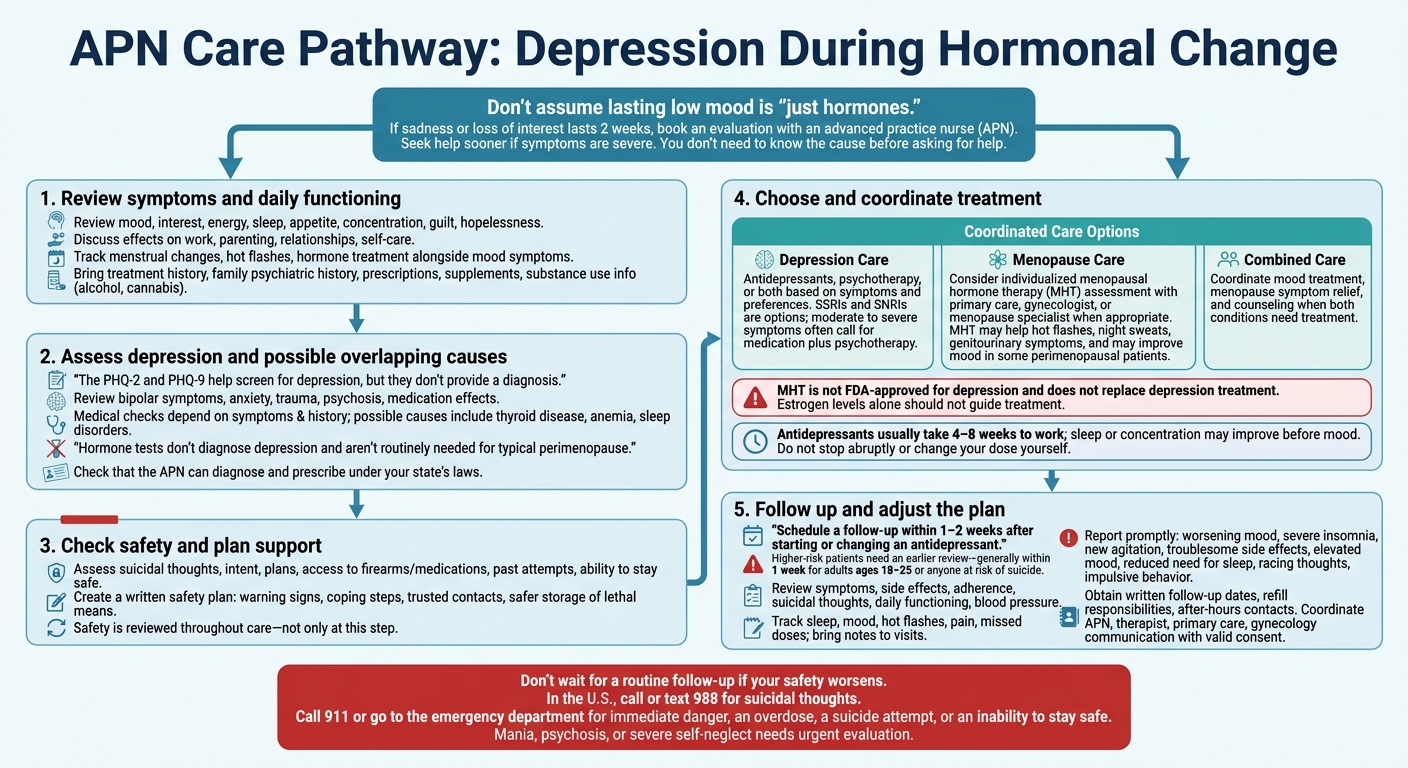
Hormonal Changes and Depression: Your APN Care Plan
Menopause-Related Mood Disorders: Estrogen as a Neuroendocrine Regulator in Midlife Mental Health
APN Psychiatric Assessment and Safety Checks
Menopause symptoms can look like depression. A structured APN assessment helps sort out whether mood changes are related to hormones, depression, or both. Check that the APN can diagnose and prescribe under your state’s laws, since their scope of practice depends on their credential and care setting.
Reviewing Symptoms and Health History
Through a clinical interview, mental status exam, and diagnostic standards, the APN reviews your mood, interest, energy, sleep, appetite, concentration, guilt, and hopelessness. They also ask how symptoms affect work, parenting, relationships, and self-care.
The APN compares how you’re doing now with your usual level of functioning. They track symptoms alongside menstrual changes, hot flashes, and hormone treatment. Bring your treatment history, family psychiatric history, and a complete list of prescriptions and supplements. Include details about alcohol, cannabis, and other substance use.
Depression Screening and Medical Checks
The PHQ-2 and PHQ-9 help screen for depression, but they don’t provide a diagnosis. The APN reviews your answers and checks for bipolar symptoms, anxiety, trauma, psychosis, and medication effects. Before antidepressant treatment is considered, report any periods of unusually high energy, less need for sleep, racing thoughts, or impulsive behavior.
Medical checks depend on your symptoms and history. The APN may coordinate with primary care to check for thyroid disease, anemia, or sleep disorders. Hormone tests don’t diagnose depression and aren’t routinely needed for typical perimenopause. After screening and medical review, the APN checks suicide risk and immediate safety before treatment begins.
Suicide Risk and When to Seek Urgent Help
Expect direct questions about suicidal thoughts, intent, plans, access to firearms or medications, past attempts, and whether you can stay safe. When needed, the APN creates a written safety plan with warning signs, coping steps, trusted contacts, and safer storage of lethal means.
Mania, psychosis, or severe self-neglect needs urgent evaluation. Call or text 988 for suicidal thoughts. Call 911 or go to the emergency department for immediate danger, an overdose, a suicide attempt, or an inability to stay safe.
Planning Medication and Hormone Treatment
After diagnosis and a safety review, your APN builds a treatment plan around your mood and menopausal symptoms. The plan should account for your diagnosis, symptom severity, effects on daily life, past treatments, medical risks, current medications, and preferences. Estrogen levels alone should not guide treatment.
Choosing and Monitoring Antidepressants
SSRIs and SNRIs are options for depression. For moderate to severe symptoms, treatment often combines medication with psychotherapy.
Your APN considers anxiety, chronic pain, sleep concerns, blood pressure, sexual side effects, seizure risk, possible bipolar symptoms, and drug interactions when choosing medication. Ask about the starting dose, planned dose increases, expected benefits, side effects, and follow-up.
Antidepressants usually take 4–8 weeks to work, though sleep or concentration may improve before mood. After you start medication or change a dose, follow-up visits check whether you're taking it as prescribed, side effects, daily functioning, suicidal thoughts, and blood pressure when relevant.
Report new agitation, elevated mood, reduced need for sleep, racing thoughts, or impulsive behavior promptly. These may signal manic symptoms. Do not stop abruptly or change your dose yourself. Ask what to do if you miss a dose and how to taper under supervision when stopping.
If both depression and menopausal symptoms need treatment, your APN coordinates medications and follow-up across the plan.
When to Consider Menopausal Hormone Therapy
Menopausal hormone therapy (MHT) may help with hot flashes, night sweats, and genitourinary symptoms. It may also improve mood in some perimenopausal patients. However, MHT is not FDA-approved for depression and does not replace depression treatment.
Your APN can coordinate an assessment with primary care, a gynecologist, or a menopause specialist. Before systemic hormone therapy, the provider reviews your age, time since menopause, possibility of pregnancy, and any unexplained bleeding.
A history of breast or endometrial cancer, stroke, heart attack, blood clots, or liver disease generally argues against systemic treatment and requires specialist review. People with a uterus generally need progestogen alongside systemic estrogen to protect the uterine lining.
Comparing Depression and Menopause Treatments
These treatments have different goals and can be combined when appropriate:
- Depression care: Your APN considers antidepressants, psychotherapy, or both based on your symptoms and preferences.
- Menopause care: Your APN coordinates a hormone-treatment assessment with the appropriate medical provider.
- Combined care: Your APN works with therapists and medical providers to coordinate mood treatment, menopause symptom relief, and counseling support when both conditions need treatment.
Counseling, Daily Support, and Coordinated Care
Counseling and Daily Symptom Care
When depression overlaps with hormonal change, care should address both symptoms and day-to-day support. APNs can offer brief counseling, coping tools, and help with taking medication as prescribed, within their scope of practice. Track sleep, mood, hot flashes, pain, and missed doses. Bring these notes to each visit to help your APN and therapist see how hormonal symptoms and depression interact and adjust care together.
Cognitive behavioral therapy (CBT) helps you change thoughts and behaviors that worsen depression. Behavioral activation uses small, planned steps to rebuild routines, activity, and connection. Supportive counseling can help with caregiving stress, identity changes, and relationship strain. A trauma-informed approach puts safety, choice, and collaboration first. Goals might include steadier sleep, fewer hopeless thoughts, and better communication with a partner.
A therapist can provide regular CBT, trauma-focused care, or couples therapy. Consistent sleep, activity, meals, nutrition support, and community support can help, but they don’t replace depression treatment. Be open about alcohol use, too. Alcohol can worsen mood, disrupt sleep, and increase medication side effects.
Working With Therapists and Medical Providers
Coordination helps keep medication, therapy, and medical care aligned as treatment progresses. Arrange a written release or other valid consent so your APN, therapist, primary care provider, and gynecologist can communicate routinely. Share relevant diagnoses, baseline and follow-up symptom scores, medications, menstrual or menopausal patterns, hormone-treatment questions, and safety concerns.
A psychiatrist may join the team when the diagnosis is unclear, depression is severe or treatment-resistant, or psychiatric needs are complex. Make sure everyone knows who handles prescriptions, psychotherapy, medical checks, urgent concerns, and follow-up after missed appointments.
Tell your team if cost, transportation, work, caregiving, mobility, or language needs make visits difficult. Ask about in-person appointments, in-home services you may qualify for, community resources, and help arranging referrals. Before you leave, get written follow-up dates, refill responsibilities, and after-hours contacts. Share any crisis plan with the full care team.
Accessing Care at BestLife Counseling
For women managing depression during hormonal change, BestLife Counseling offers local APN and therapy support. Services include APN psychiatric evaluations, medication management, counseling, and outpatient and in-home therapy for depression, anxiety, and trauma.
Use the website’s “Start Here” or “Request Care” form to ask about services and next steps. Before scheduling, check clinician qualifications, insurance participation, referral requirements, out-of-pocket costs, and whether APN and therapy visits are billed separately. If you already have a therapist, ask how consent-based coordination would work.
Conclusion: Follow-Up and Next Steps
Once treatment starts, follow-up helps determine whether your plan is working or needs changes.
Tracking Progress and When to Seek More Care
Schedule a follow-up within 1–2 weeks after starting or changing an antidepressant. Higher-risk patients need an earlier review - generally within 1 week for adults ages 18–25 or anyone at risk of suicide. Your APN checks symptoms and side effects, adjusts doses when appropriate, and arranges further referrals when needed.
Contact your prescriber promptly if your mood worsens or you develop severe insomnia, new agitation, or troublesome side effects. Bipolar symptoms, psychosis, severe or treatment-resistant depression, serious reactions, or uncertainty about your diagnosis call for reassessment or specialty care.
Don’t wait for a routine follow-up if your safety worsens. Call 911 for immediate danger, or call or text 988 for a suicidal crisis.
Even if symptoms improve, difficulty with daily life is a reason to review your care plan again.
Steps in Your APN Care Plan
Your plan should move from reviewing symptoms to assessment, safety planning, treatment selection, and follow-up. Your APN coordinates therapy and medical care, including an assessment for hormone treatment when appropriate.
During hormonal changes, track both symptoms and how you’re doing day to day. Look for steadier sleep, fewer missed responsibilities, and a better ability to work, connect with others, and care for yourself. These checks help your APN keep treatment safe, coordinated, and focused on recovery in daily life.
FAQs
What if I feel depressed only before my period?
If you feel depressed only before your period, a mental health professional can assess whether hormonal shifts may play a role. At BestLife Counseling, Advanced Practice Nurses (APNs) offer psychiatric evaluations that review your symptoms, medical history, and patterns linked to your menstrual cycle.
APNs and counselors may coordinate your care, using medication management, counseling, or both to help stabilize your mood and make daily life easier.
What if my depression treatment isn't helping?
If your depression treatment isn’t helping, talk with your clinician before stopping or changing care on your own. Together, you can review whether a different approach or level of care would better meet your needs.
At BestLife Counseling, your counselor or Advanced Practice Nurse (APN) can reassess your needs and coordinate care. This may mean reviewing your goals, having your APN adjust your medication, or adding therapy strategies.
How can I afford APN care without insurance?
Contact BestLife Counseling directly to review your care options and the costs of psychiatric evaluations and medication management before treatment begins. Combining therapy and medication may increase your out-of-pocket expenses, so ask about fees and cancellation policies for your treatment plan.
Call (609) 486-2003 to discuss care options that fit your budget.