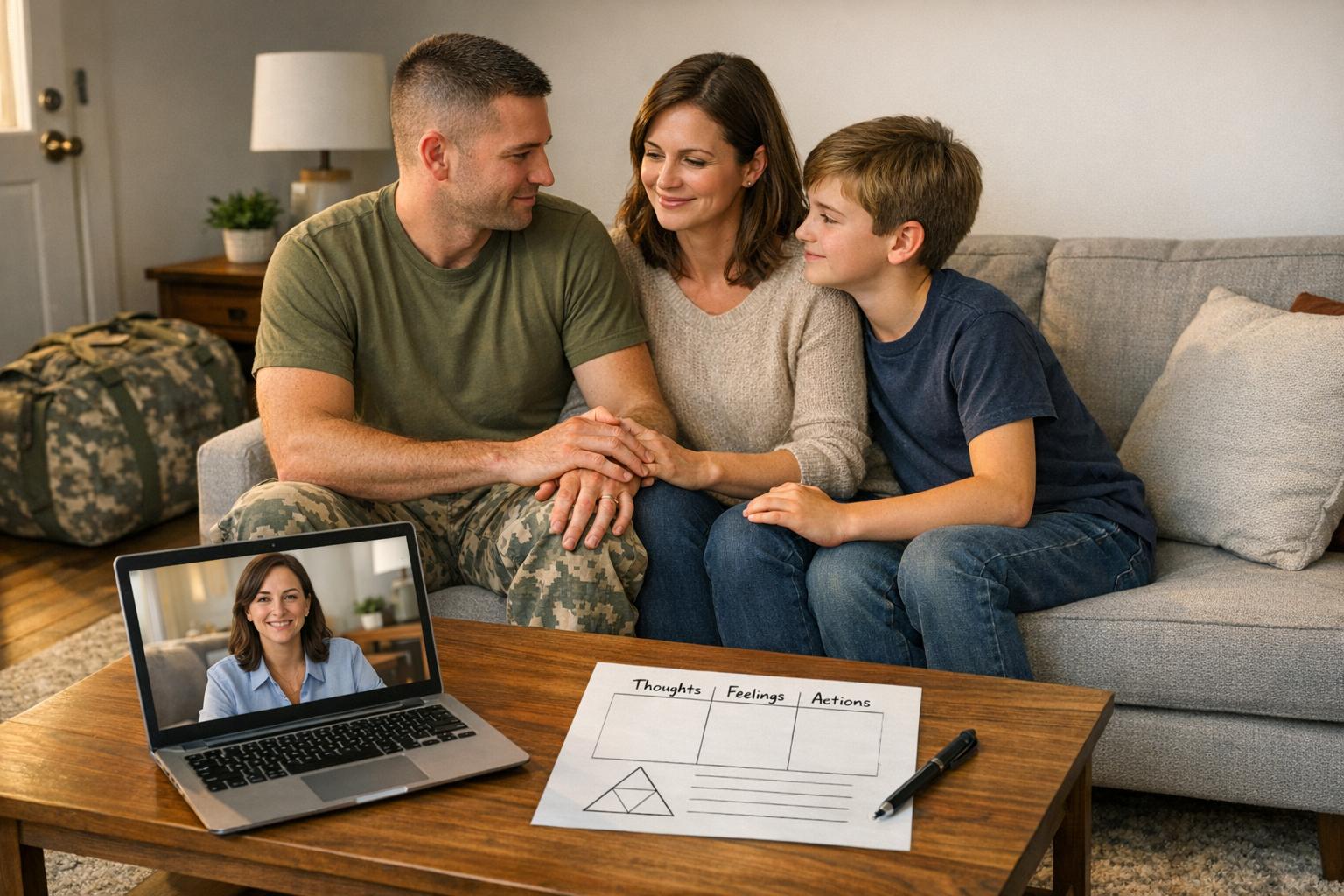
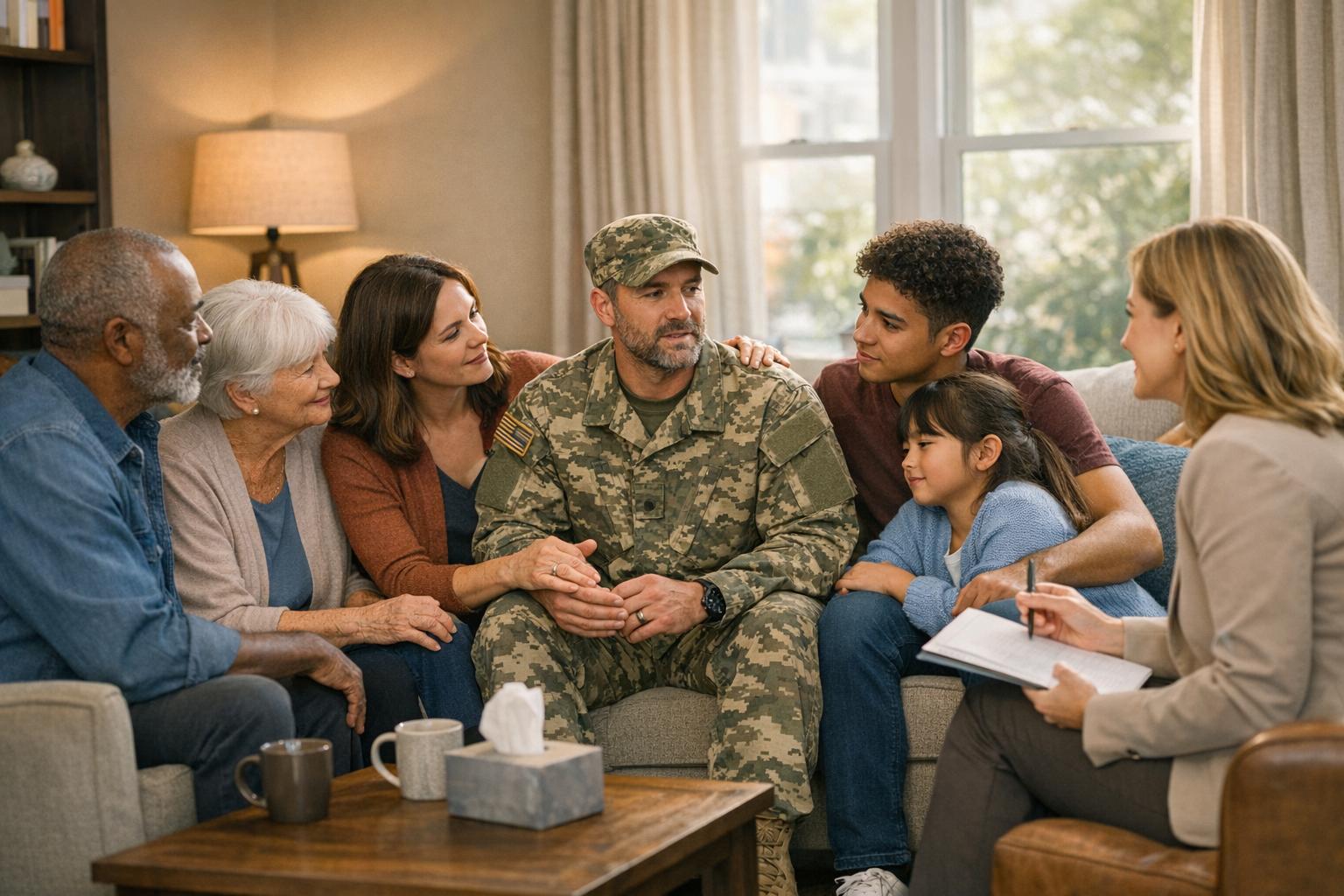
Family therapy helps veterans with PTSD by improving communication, relationships, and understanding within their families. This approach doesn’t just address the veteran’s symptoms but also strengthens family dynamics, making recovery a shared process. Here’s how it works:
- Improves family support: Therapy teaches communication tools like "I" statements to reduce conflict and encourages open sharing, breaking harmful patterns like "protective buffering."
- Eases PTSD symptoms: Methods like Cognitive Behavioral Conjoint Therapy (CBCT) and Structural Approach Therapy (SAT) help reduce avoidance behaviors and reorganize family dynamics.
- Educates families: Psychoeducation helps families understand PTSD as a treatable condition, equipping them to support veterans during tough moments.
- Addresses family-wide impact: Therapy identifies and changes patterns that unintentionally worsen PTSD, benefiting spouses, children, and the household as a whole.
- Affordable care through VA benefits: Services are free for veterans and their families via Vet Centers, VA Medical Centers, and CHAMPVA, with no preauthorization needed for outpatient mental health visits.
Family therapy transforms recovery into a team effort, improving outcomes for veterans and their loved ones.
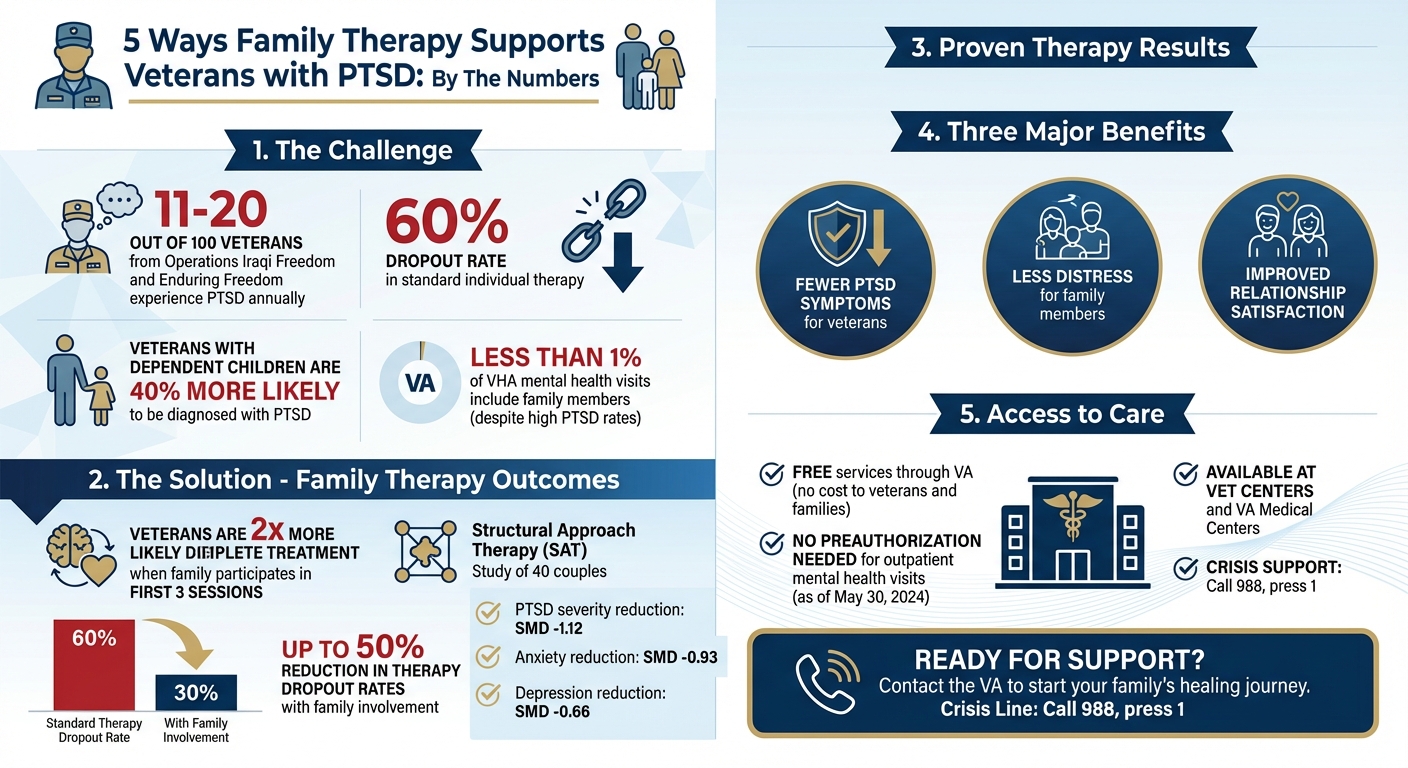
Family Therapy Impact on Veterans with PTSD: Key Statistics and Benefits
What role does my family play in therapy for post traumatic stress disorder?
1. Builds Stronger Family Support and Participation
Family therapy turns concerned loved ones into active participants in the recovery process by teaching effective communication strategies that encourage open and honest dialogue. For example, therapists introduce tools like using "I" statements - saying things like "I feel worried when..." instead of "You always..." - to help prevent conversations from escalating into arguments. These methods create a foundation for addressing deeper issues, such as the tendency for "protective buffering."
"Protective buffering" happens when family members hide their own stress to seem supportive, but this often leads to feelings of isolation instead. Therapy helps families break this harmful cycle by promoting open sharing and mutual understanding.
A study conducted in March 2022 across three VA Healthcare Systems highlighted the impact of family involvement. It found that veterans were more than twice as likely to complete their treatment when family members participated in the first three sessions as "workout buddies." This approach helps address the 60% dropout rate seen in standard individual therapy.
Additionally, techniques like "Catch and Share" and regular weekly check-ins enable families to quickly recognize and acknowledge coping efforts during moments of trauma reminders. These practices help sustain meaningful support over time.
2. Improves Relationships and Reduces PTSD Symptoms
Strengthening family bonds through targeted therapies can significantly ease PTSD symptoms and improve daily interactions for veterans and their loved ones.
When better communication reduces household stress and alleviates PTSD symptoms, specialized therapeutic methods can speed up recovery. One such approach is Cognitive Behavioral Conjoint Therapy (CBCT), where veterans participate in therapy sessions alongside their partner. This method addresses both PTSD and relationship challenges simultaneously. In a study involving 40 couples, CBCT led to a notable reduction in PTSD severity (SMD -1.12), anxiety (SMD -0.93), and depression (SMD -0.66).
Family therapy also plays a pivotal role by addressing "symptom accommodation." This occurs when family members unknowingly reinforce avoidance behaviors, such as skipping social gatherings or avoiding crowded areas. While these actions may seem supportive at first, they can actually perpetuate PTSD symptoms and hinder recovery. Therapists work with families to encourage veterans to face their triggers, a necessary step in the healing process.
Another effective method, Structural Approach Therapy (SAT), focuses on family roles and dynamics that may contribute to a veteran's stress. Research has shown SAT to be more effective than basic family education in reducing PTSD severity for veterans (SMD -1.32). While CBCT targets avoidance behaviors, SAT aims to reorganize family structures to reduce stress. Together, these therapies help break negative cycles and provide tools for healthier communication.
Simple techniques like active listening, where partners repeat and validate key points, can further enhance understanding. Additionally, a time-out system, where couples use a pre-agreed signal to pause heated arguments, helps prevent conflicts from escalating.
"The ability for the veteran to just tell their story and really explore what the trauma means to them, with their partner - it's so different than when they do it with me... it's just incredibly powerful to get that support and acceptance from the person whose opinion matters the most to them." - VHA Clinician
3. Educates Families About PTSD as a Treatable Condition
One of the key strengths of family therapy is psychoeducation - helping families understand that PTSD is a medical condition rooted in specific symptoms, not a personality flaw or an irreversible change. Therapists guide families through how trauma impacts the brain, explaining why veterans might exhibit behaviors like withdrawal, anger, or emotional numbness. This knowledge equips families to handle tough situations at home with greater empathy and effectiveness. It also lays the groundwork for families to actively participate in the healing process.
Understanding that PTSD is treatable encourages families to avoid unintentionally enabling behaviors that reinforce avoidance. Instead, it shifts their focus toward supporting veterans as they face triggers - a crucial element in therapies like Prolonged Exposure. This type of therapy can be tough, as symptoms may temporarily worsen when trauma is being processed. As one therapist explains, "I like the spouse to know what's going on… almost to make the spouse have informed consent". By preparing families for these challenges, therapists empower them to act as supportive "treatment coaches" during difficult moments.
The benefits of this approach are clear. When families are involved in PTSD treatment, dropout rates can decrease by as much as 50%, showing how effective these strategies can be. Yet, despite these advantages, family-inclusive sessions make up less than 1% of mental health visits for veterans with high PTSD rates in the VHA. This gap highlights a major opportunity to expand access to local, in-person family therapy programs and provide more comprehensive care.
"Knowing how PTSD affects people may help you understand what your family member is going through. The more you know, the better you and your family can handle PTSD." – National Center for PTSD
4. Addresses How PTSD Affects the Entire Family
PTSD doesn't just affect the individual experiencing it - it ripples through the entire household. Veterans dealing with symptoms like anger or emotional withdrawal can unintentionally create an environment of fear and frustration for their loved ones. Studies show that partners of veterans with PTSD experience a heavier caregiving burden compared to those supporting veterans with other behavioral health challenges. Children, too, often struggle, facing a higher likelihood of behavioral issues and confusion as they try to understand why their parent seems so different. This shared impact highlights the importance of involving every family member in the recovery process.
Family therapy plays a critical role in addressing these challenges. It helps families understand how their dynamics can either hinder or support recovery. For instance, a common pattern called "symptom accommodation" occurs when loved ones inadvertently reinforce avoidance behaviors to keep the peace. A spouse might take over certain responsibilities to shield the veteran from triggers, but this well-intentioned act can actually perpetuate avoidance. Therapy works to identify and change these patterns, promoting healthier ways of interaction and response.
The broader impact of PTSD on families is significant. Research shows that 11–20 out of every 100 veterans who served in Operations Iraqi Freedom and Enduring Freedom experience PTSD each year. Veterans with dependent children are also 40% more likely to be diagnosed with PTSD than those without children. Despite this, family-inclusive therapy sessions make up less than 1% of mental health appointments within the Veterans Health Administration. This gap underscores the need for more family-centered approaches to care.
Family therapy introduces practical tools to improve communication and reduce tension. Techniques like the "Time-Out" system help families pause during heated moments, while using "I" statements prevents blame and fosters constructive dialogue. These strategies not only establish healthier boundaries but also strengthen emotional connections within the family.
Research confirms that involving families in treatment leads to three major benefits: fewer PTSD symptoms for the veteran, less distress for family members, and improved relationship satisfaction. By learning to manage stress together and set clear boundaries, families can move from feeling overwhelmed to becoming active participants in the healing process. These approaches build on earlier communication skills and psychoeducation, creating a strong foundation for the veteran's recovery journey.
5. Works with VA Benefits for Affordable In-Person Care
VA family counseling removes financial hurdles for veterans and their families. These services are available at no cost to veterans and their loved ones, even if they’re not enrolled in VA healthcare.
Veterans can access counseling through Vet Centers and VA Medical Centers. Vet Centers, located in communities, provide counseling services. VA Medical Centers, on the other hand, offer family therapy through their mental health clinics and social work departments. For families eligible under CHAMPVA (Civilian Health and Medical Program of the Department of Veterans Affairs), family therapy is covered when paired with treatment for a diagnosed mental health or substance use condition. Additionally, as of May 30, 2024, the VA has done away with preauthorization requirements for outpatient mental health visits exceeding 23 per year. This change simplifies continued access to care. These federal benefits serve as a foundation for further local support options.
"Family counseling services are available to Veterans and their family members at no cost. You don't need a referral to access these services, and family members can participate even if they're not enrolled in VA healthcare." - Veterans Alliance
Local providers, such as BestLife Counseling in South Jersey, supplement VA services by offering outpatient and in-home therapy that aligns with VA benefits. If you’re considering private providers, it’s important to confirm whether their services work with VA benefits or the Community Care Network to ensure cost-effective care.
For family therapy referrals, reach out to your local Vet Center, VA Medical Center, or your primary care provider. If you need urgent assistance, call 988 and press 1.
Conclusion
Family therapy plays a crucial role in helping veterans manage PTSD by involving their loved ones in the recovery process. When families understand PTSD, they can avoid unintentionally reinforcing symptoms and instead contribute to healing. This collaborative approach turns what might feel like a solitary battle into a united effort, significantly improving outcomes. In fact, family involvement has been shown to reduce therapy dropout rates by up to 50% compared to individual treatment alone.
The strategies discussed here work together to create a supportive environment for veterans, helping them feel connected rather than isolated. In-person sessions, in particular, provide opportunities for veterans to share their experiences with those closest to them, fostering moments of acceptance and understanding that can be pivotal to recovery.
For families in South Jersey, local providers like BestLife Counseling offer accessible, in-person care tailored to veterans' needs. With outpatient and in-home therapy options, they complement VA services by providing trauma-focused, flexible care. Whether you're starting with VA resources at a Vet Center or seeking support from local providers, taking that first step together is key - because recovery from PTSD is a journey best shared.
FAQs
How can family therapy help veterans manage PTSD and strengthen relationships?
Family therapy plays a crucial role in helping veterans manage PTSD by bringing their loved ones into the healing process. It focuses on improving communication, easing relationship stress, and creating a more supportive and understanding home environment. Using proven methods like cognitive-behavioral conjoint therapy, it tackles trauma-related thoughts and behaviors, often resulting in noticeable relief from symptoms.
When families work together, veterans often feel more understood and supported, which helps strengthen their relationships and encourages lasting recovery. This approach doesn’t just help the veteran - it also enhances the emotional health and resilience of the entire family.
How can family members support a veteran's recovery from PTSD?
Family members play a crucial role in helping veterans recover from PTSD by offering emotional support and actively engaging in the healing journey. By learning about PTSD - its triggers, symptoms, and available treatments - they can respond with understanding and help create a more supportive home atmosphere. This might involve attending therapy sessions, assisting with treatment plans, and encouraging open communication.
Family therapy can be a powerful tool to strengthen relationships, rebuild trust, and develop better coping strategies. In-person sessions, like those provided by BestLife Counseling, focus on education, improving communication, and shared activities that encourage healing and stability. When families come together in this way, they can help turn therapeutic progress into lasting resilience for veterans at home.
Is family therapy covered under VA benefits, or will I need to pay out of pocket?
Family therapy is provided at no cost for eligible veterans through VA benefits. This means veterans and their families can receive the care they need without worrying about out-of-pocket expenses. To find out if you qualify and explore the services available, reach out to your local VA office for more details.