
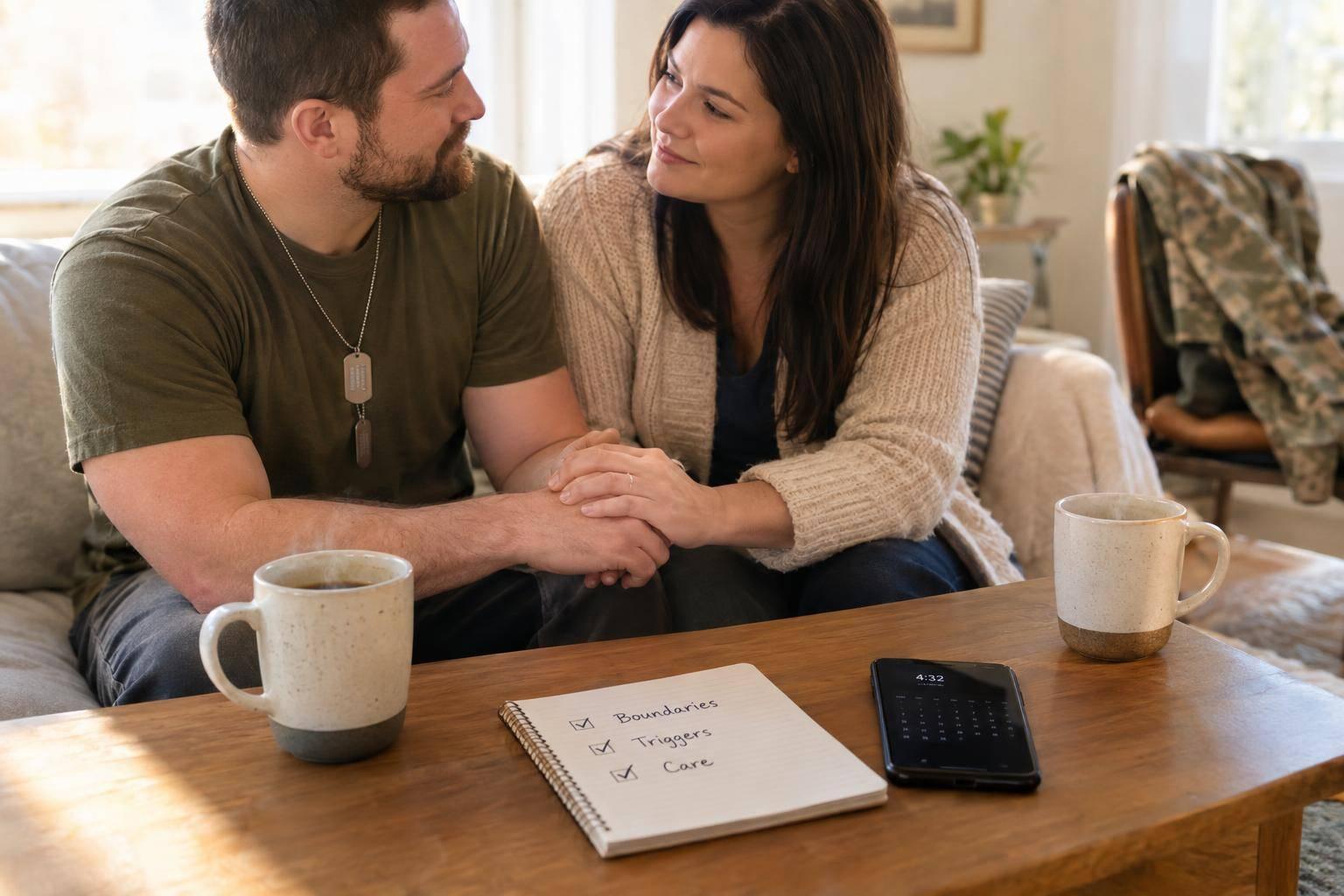
You can support a veteran with PTSD without becoming their therapist - or putting your safety last. My advice: talk when you’re both calm, agree on boundaries, and seek professional care when symptoms disrupt home life.
About 7 in 100 U.S. veterans experience PTSD during their lives, according to the VA’s National Center for PTSD. It can affect sleep, communication, parenting, and intimacy. Distance doesn’t always mean a lack of love - but its effect on you matters.
Here’s what I’d focus on:
- Daily life: Plan for triggers, nighttime distress, household tasks, and low-pressure time together.
- Care: Ask about PTSD treatment, safe couples counseling, medication care, and in-person, in-home, or telehealth options.
- Your needs: Get support for yourself, protect children from adult conflict, and check provider credentials, costs, and VA resources.
<u>PTSD does not excuse abuse.</u> Joint counseling may be unsafe when there’s coercion or fear. Call 911 for immediate danger. Veterans and loved ones can reach crisis support 24/7 by calling 988, then pressing 1, or texting 838255.
Understanding PTSD to support a spouse
How PTSD Can Affect Family Life
At home, PTSD often affects daily routines, sleep, and closeness - not just isolated difficult moments.
Withdrawal, emotional numbness, irritability, and hypervigilance may feel like rejection, even when they’re trauma responses. The effect on family members still matters: partners may feel lonely, while children may become anxious or cautious.
| PTSD-related symptom | Possible effect at home | Constructive partner response |
|---|---|---|
| Withdrawal or avoidance | Less conversation and fewer shared activities | Offer low-pressure connection while respecting the need for space. |
| Emotional numbness | Less affection may feel like rejection | Talk about the distance without blame and find ways to reconnect that feel safe for both partners. |
| Irritability or heightened reactivity | Arguments escalate; family members feel on edge | Agree on a pause signal and return to the conversation later. Put safety first. |
| Hypervigilance or exaggerated startle | Crowds, traffic, or busy gatherings feel difficult | Ask what timing, seating, or exit plan would help. |
| Nightmares or insomnia | Both partners lose sleep and patience | Plan nighttime support and seek treatment for episodes that persist or create safety concerns. |
These responses can help with communication. They do not make a partner responsible for preventing symptoms or providing treatment. Symptoms may also intensify around reminders, including noise, crowds, or anniversaries.
Military Reminders, Returning Home, and Intimacy
Fireworks, backfiring vehicles, helicopters, crowds, traffic, military news, and anniversaries may cause distress. Triggers differ from person to person. Ask what support would help or offer a quieter option without asking for the traumatic story. Returning home can also mean adjusting to changed roles while dealing with grief, pain, or guilt.
Less affection or sexual interest may also stem from fatigue, depression, pain, or medication effects. It doesn’t automatically mean rejection or infidelity. Talk about comfort, boundaries, and ways to pause outside an intimate moment. Consent must be freely given throughout, with no punishment for declining contact. Couples counseling may help with trust and closeness without requiring the veteran to discuss trauma before they’re ready.
Sleep Problems and Household Stress
Nightmares, insomnia, and nighttime vigilance can exhaust both partners. Parenting, chores, work, and financial decisions may become harder. Missing gatherings can also strain ties with extended family.
Be clear about who handles each responsibility, protect children’s sleep routines, and postpone high-stakes discussions after a sleepless night. Temporary separate sleeping spaces can help when both partners agree; they don’t mean the relationship is failing.
Children need age-appropriate reassurance that a parent’s distress is not their fault. They should never serve as messengers, monitors, or mediators. Partners also need support when sleep loss, resentment, isolation, or anxiety builds. Individual counseling, trusted adults, and the VA Caregiver Support Program can offer help, including outside support when sleep loss keeps adding up.
Building Safer Daily Routines
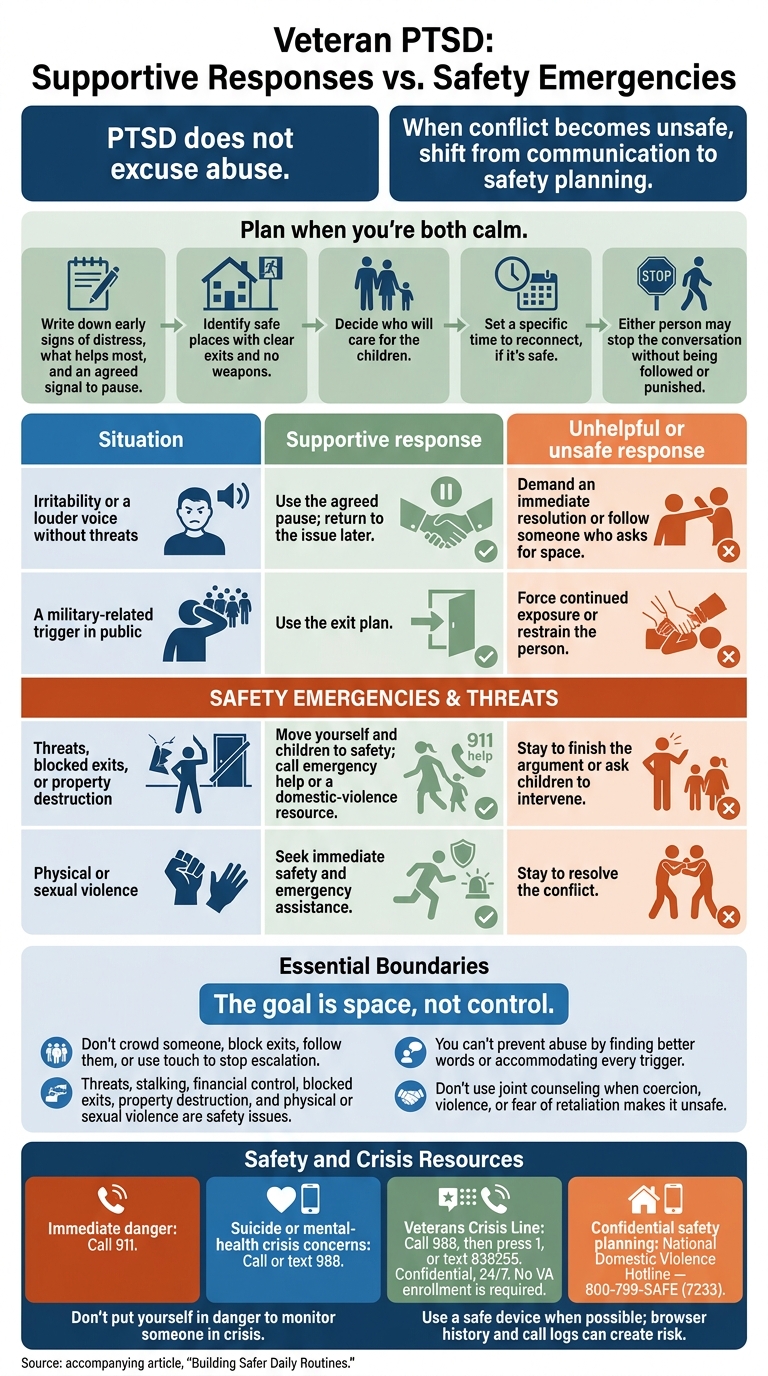
Veteran PTSD: Supportive Responses vs. Safety Emergencies
When PTSD disrupts home life, clear routines can help lower risk. When conflict becomes unsafe, shift from communication to safety planning. Threats, stalking, financial control, blocked exits, property destruction, and physical or sexual violence aren't ordinary disagreements. They're safety issues.
You can't prevent abuse by finding better words or accommodating every trigger. Seek confidential safety planning. Don't use joint counseling when coercion, violence, or fear of retaliation makes it unsafe.
Responding to Triggers and Anger Safely
During a calm moment, write down early signs of distress, what helps most, and an agreed signal to pause. Identify safe places with clear exits and no weapons, and decide who will care for the children. Set a specific time to reconnect, if it's safe.
Either person may stop the conversation without being followed or punished. During distress, keep your words brief and calm. Don't crowd someone, block exits, follow them, or use touch to stop escalation. The goal is space, not control.
Practice these rules when things are calm - not during an escalation.
| Situation | Supportive response | Unhelpful or unsafe response |
|---|---|---|
| Irritability or a louder voice without threats | Use the agreed pause; return to the issue later. | Demand an immediate resolution or follow someone who asks for space. |
| A military-related trigger in public | Use the exit plan. | Force continued exposure or restrain the person. |
| Threats, blocked exits, or property destruction | Move yourself and children to safety; call emergency help or a domestic-violence resource. | Stay to finish the argument or ask children to intervene. |
| Physical or sexual violence | Seek immediate safety and emergency assistance. | Stay to resolve the conflict. |
Keep crisis numbers with the safety plan.
Call 911 for immediate danger. For suicide or mental-health crisis concerns, call or text 988. Veterans and supporters can call 988, then press 1, or text 838255 to reach the confidential, 24/7 Veterans Crisis Line. No VA enrollment is required. Don't put yourself in danger to monitor someone in crisis.
For confidential safety planning, contact the National Domestic Violence Hotline at 800-799-SAFE (7233). Use a safe device when possible; browser history and call logs can create risk.
Choosing PTSD Care and Support
If PTSD is still disrupting home life, start with a clinical assessment. Then choose treatment, participants, and a setting that fit the symptoms, safety needs, and access to care. Consider willingness to participate, medical needs, transportation, and coverage.
Look for the right level of care - not just the first available appointment.
| Care option | Decision point |
|---|---|
| Individual trauma treatment | Choose structured, evidence-based treatment with a qualified trauma therapist to address PTSD symptoms. |
| Couples or family counseling | Work on relationship or household strain together only when sessions can take place safely. |
| Partner-only counseling | Get support for your coping, boundaries, and safety, whether or not the veteran participates in treatment. |
| Outpatient care | Choose clinic-based appointments when transportation and regular attendance are possible. |
| In-home care | Reduce travel barriers when the home is safe, private, and suitable for treatment. |
| Psychiatric APN care | Seek psychiatric evaluation, medication management, and coordination with other clinicians. |
| Telehealth | Confirm privacy, reliable technology, an emergency plan, and a clinician authorized to practice in the patient’s state. |
PTSD Treatment, Couples Counseling, and Psychiatric APN Care
Cognitive Processing Therapy (CPT) focuses on trauma-related beliefs, including guilt and self-blame. Prolonged Exposure (PE) uses gradual, therapist-guided engagement with trauma memories and avoided situations. Eye Movement Desensitization and Reprocessing (EMDR) combines structured trauma processing with bilateral stimulation, such as guided eye movements. Before recommending treatment, a clinician should assess symptoms, safety, co-occurring conditions, readiness, and preferences.
Couples counseling should happen only when sessions are safe. Violence, coercive control, fear of retaliation, severe instability, or inadequate privacy can make joint sessions unsafe. In those cases, sessions should be postponed, modified, or replaced with individual support.
A psychiatric Advanced Practice Nurse (APN) can evaluate symptoms and medical history, assess risk, and prescribe or adjust medication when legally authorized. They may also offer counseling within their training and scope. Medication management may help reduce sleep loss, irritability, or hyperarousal that strains the relationship. Ask about PTSD experience, prescribing authority, side-effect monitoring, follow-up, coordination with other clinicians, and procedures for urgent concerns.
VA, Vet Center, and Community Resources
VA mental health services, Vet Centers, and VA caregiver resources are places to start. Vet Centers offer community-based readjustment counseling, including individual, group, marriage, and family counseling for eligible veterans, service members, and families. The VA Caregiver Support Line, 855-260-3274, provides information, short-term counseling, and connections to local caregiver-support teams. Confirm current hours, eligibility, referral requirements, and family-service availability directly.
For community care, check insurance participation, VA Community Care acceptance and authorization requirements, out-of-pocket costs, and coverage for couples sessions. Request a written estimate that includes cancellation fees. Also ask how the provider coordinates with VA or primary-care clinicians.
Choosing In-Person, In-Home, or Telehealth Care
Choose a setting that supports treatment, not simply the easiest appointment to book. In-person care provides a clinical setting with fewer household interruptions. In-home care reduces travel barriers but requires safety and confidentiality screening, including agreement about who may be present.
For telehealth, confirm privacy, emergency planning, and state licensure. Whichever setting you prefer, check which treatments the provider offers there.
What to Ask BestLife Counseling
BestLife Counseling is one local option offering in-home and outpatient therapy and psychiatric APN care. Ask about veteran-specific experience, which treatments the practice offers, and specific training in CPT, PE, or EMDR. Discuss privacy, fees, and coordination with existing providers. Before booking, confirm credentials, coverage, and current service availability.
Conclusion: Boundaries and Next Steps
As you put these ideas into practice, watch for early warning signs and triggers. Agree on simple routines when you’re both calm, and protect your own rest and support network. Support can help, but it doesn’t replace PTSD treatment.
Start with sleep: this week, write a shared plan for nightmares, children’s needs, and a morning check-in. Abuse and crisis call for outside help. If you’re in immediate danger, leave if you can and call 911. Veterans and concerned loved ones can reach the Veterans Crisis Line 24/7 by calling 988, then pressing 1, or texting 838255.
FAQs
What if my partner refuses PTSD treatment?
Focus on open communication and less stress at home. Ask, “How are you really doing?” and give your partner room to answer without pressure. Learn about PTSD triggers, but be careful not to reinforce avoidance - for example, by routinely skipping social events.
Your support matters, too. Consider individual therapy or local community resources for yourself. BestLife Counseling offers in-person individual and couples therapy in New Jersey to help you work through relationship challenges, even if your partner is hesitant at first.
How can we tell if PTSD treatment is helping?
PTSD treatment may be helping when a veteran feels less anxious, depressed, or irritable. Better communication and fewer conflicts at home can also point to progress.
You might notice them taking a more active part in daily life, joining social activities, and spending less time alone. Other signs include replacing unhelpful thought patterns with healthier ways to cope and managing emotions better during stressful moments.
How do I support my partner without burning out?
Supporting your partner doesn’t mean hiding your own stress. Use “I” statements to share how you feel without placing blame. Practice active listening, and agree on time-out signals so you can pause when conflict starts to build.
Couples or family therapy can help you set healthy boundaries and share the work of recovery instead of carrying it alone. BestLife Counseling offers in-person individual and couples therapy to help with boundaries and communication.